 Skip to content



Bali is also discovered through its flavors
While the Island of the Gods fascinates with its temples, volcanoes, and neon-green rice paddies, it is above all savored through its cuisine. Eating in Bali is never just a nutritional act: it’s a social gesture, a spiritual ritual, sometimes even an art. Whether it’s crispy roasted pork shared after a ceremony, a colorful vegan plate devoured after a yoga class, or an espresso filtered bean by bean in a creative workshop, every bite tells a story.
This guide, without tables, without specific establishment recommendations, and without price indications, offers you an exhaustive overview of Balinese flavors so you can explore the island independently, with your senses awakened. This immersive and sensory approach is often favored by a travel agency in Bali specializing in tailor-made itineraries.
1. The Fundamentals of Balinese Cuisine
Before succumbing to the fusion dishes of trendy neighborhoods, you need to know the pillars that form the basis of Balinese taste:
- Babi Guling (spit-roasted pork) – A suckling pig stuffed with a fresh spice paste: turmeric, galangal, bird’s eye chili, garlic, ginger, lemongrass. Slowly turned over coconut embers, it develops crispy skin and juicy meat. Often prepared for celebrations, it symbolizes abundance and collective joy.
- Ayam or Bebek Betutu (smoked chicken or duck) – The poultry is coated with a complex mixture – shallots, garlic, candlenut, red chili, coriander, candlenut – then wrapped in banana leaves and cooked for hours in hot ash. The meat falls off the bone; the smoky aroma lingers long in the memory.
- Lawar – Chopped salad mixing long beans, young banana shoots, grilled coconut, herbs, red or white spices. In the traditional version, a dash of fresh blood acts as a binder to intensify the umami. Families adjust proportions according to seasons and beliefs; no two plates are alike.
- Sate Lilit – Finely minced fish, chicken, or pork mixed with grated coconut and molded around a lemongrass stalk. A few minutes over embers are enough; the skewer is enjoyed while still sizzling, garnished with a raw sambal matah sauce made with shallots and kalamansi.
- Nasi Campur Bali – A cone of white or red rice surrounded by several small piles: spicy vegetables, sautéed tempeh, grilled tuna flakes, hard-boiled egg cooked in sambal, sometimes a spoonful of beef stew. It’s the simplest way to taste everything; each cook creates their own assortment.
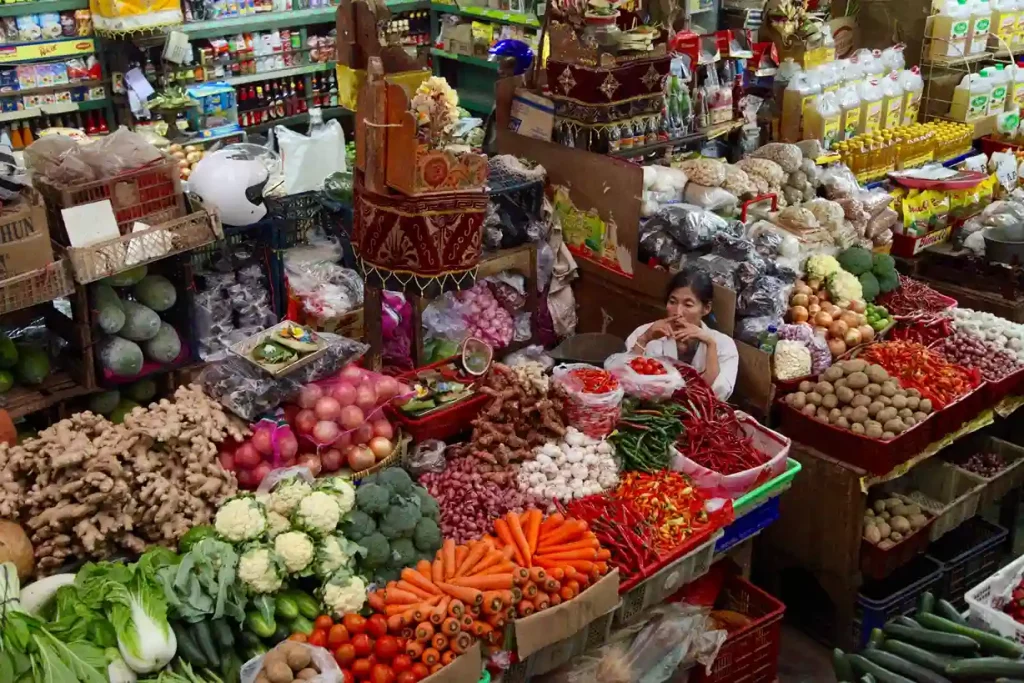
These dishes reveal the local culinary philosophy: balance of flavors, respect for freshness, exaltation of textures, and, above all, conviviality.
2. Street Food and Warungs: A Bali Vacation Classic
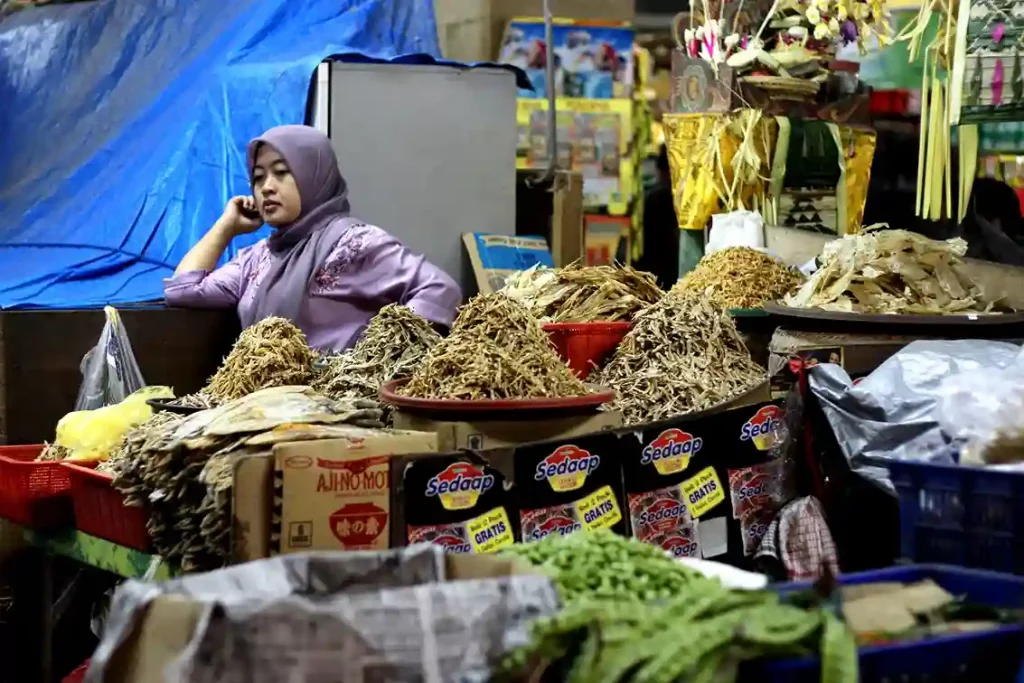
To understand daily life, follow the sizzle of woks at dusk. In night markets, you’ll spot a cloud of fragrant steam and a line of locals: an infallible sign that the pot is worth a detour. Passersby snack on:
- steaming bowls of beef meatball broth, garnished with vermicelli, puffed tofu skin, and a hint of kaffir lime
- thick, buttery pancakes, folded in half under an avalanche of sesame, melted coconut sugar, and sometimes cocoa nibs
- golden fritters filled with banana, cabbage, or corn, eaten on the go
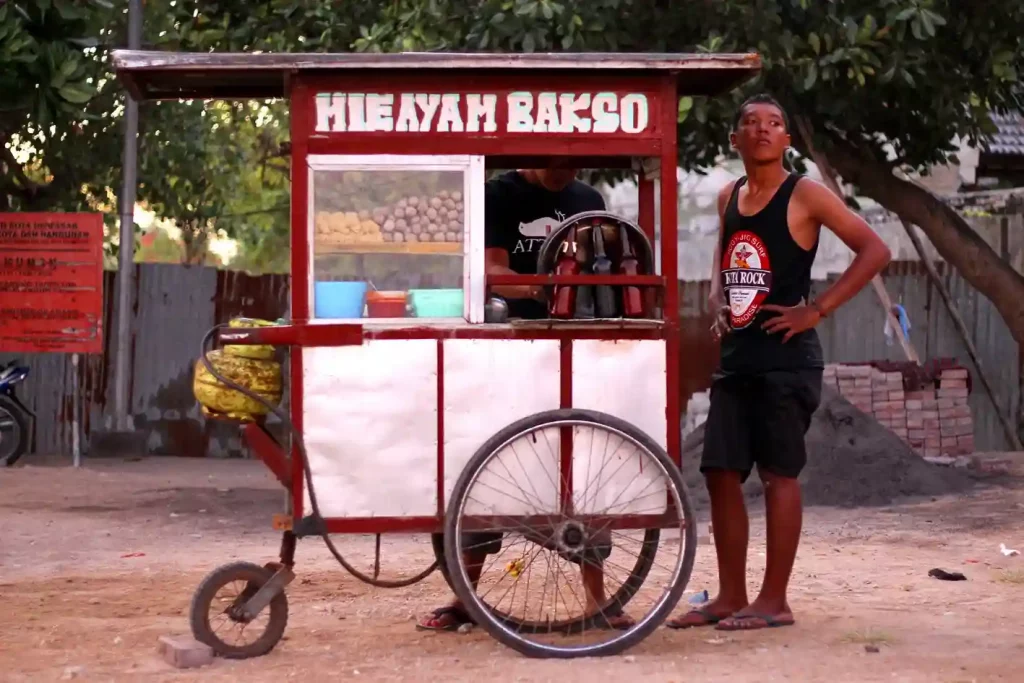
Everything is enjoyed standing up while exchanging a few words, because the essence of Balinese street food lies as much in the taste as in the social connection it creates. These daily scenes are often part of the experiences sought by travelers accompanied by a travel agency in Bali attentive to local culture.
3. Ceremony Cuisine: When the Gods Share the Table (Even with Bali Vacationers)
In Bali, food dialogues with the divine. During a temple anniversary, a full moon, or any Hindu celebration, families prepare quantities of offerings:
- Gebogan, fruit towers stacked in pyramids, where purple mangosteens, scaly salaks, and buttery avocados compete in color
- Jaja Bali, colorful steamed cakes with pandan leaf or palm sugar, arranged in concentric circles
- Whole lacquered ducks, fish wrapped in banana leaves, sanctified vegetarian dishes
After prayers, these foods descend to the human realm: the community shares them, perpetuating the circulation of energy between the visible and invisible.
4. Tropical Fruits and Sweet Treats to Brighten Your Vacation
It’s impossible to leave a Balinese market without a basket overflowing with fruit. Depending on the season, you can bite into:
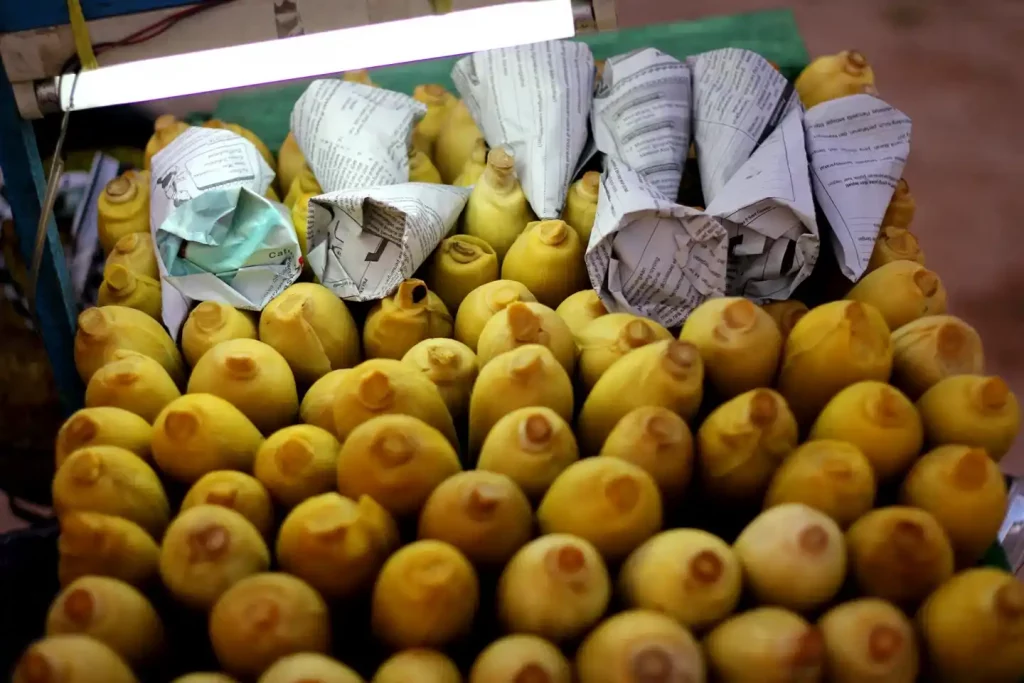
- Mangosteen: thick rind, snowy pulp, flavor halfway between lychee and peach
- Durian: controversial aroma, creamy flesh like a custard with roasted garlic
- Rambutan: hairy red shell, translucent heart sweeter than lychee
- Salak: scaly skin reminiscent of a snake, crunchy flesh evoking honey apple
As for sweets, the klepon is worth a detour: a glutinous rice ball rolled in fresh coconut; with the first bite, a palm sugar caramel explodes in your mouth.
5. The Rise of Veggie and Vegan: A Laboratory for New Habits to Speak to Tourists Worldwide
Yoga, meditation, and wellness retreats have elevated Bali to the capital of green plates. It is no longer uncommon to find, even in coastal villages, warungs offering:
- braised jackfruit burgers topped with a rendang-style sauce
- bowls of crispy marinated tempeh, garnished with cabbage, avocado, and cashew puree
- ceremonial cocoas, homemade coconut milks infused with pandan and ginger
This movement is not just an imported trend; it dialogues with local tradition, where plant proteins and root vegetables have always held an important place, often underestimated by carnivorous travelers.
6. Coffee: From Kintamani Plantations to Designer Counters
The history of Balinese coffee dates back to the first Arabica plants on the volcanic slopes of Kintamani. Today, the third wave has arrived: roasting workshops, barista training, blind tastings, piston extractions, V60, or short espresso measured to the second.
The experience can begin at the source: a morning trek in a plantation, picking ripe cherries, pulping, sun-drying on African beds. A few days later, the beans are roasted in small batches, then served filtered to reveal notes of cocoa, tamarind, and orange blossom.
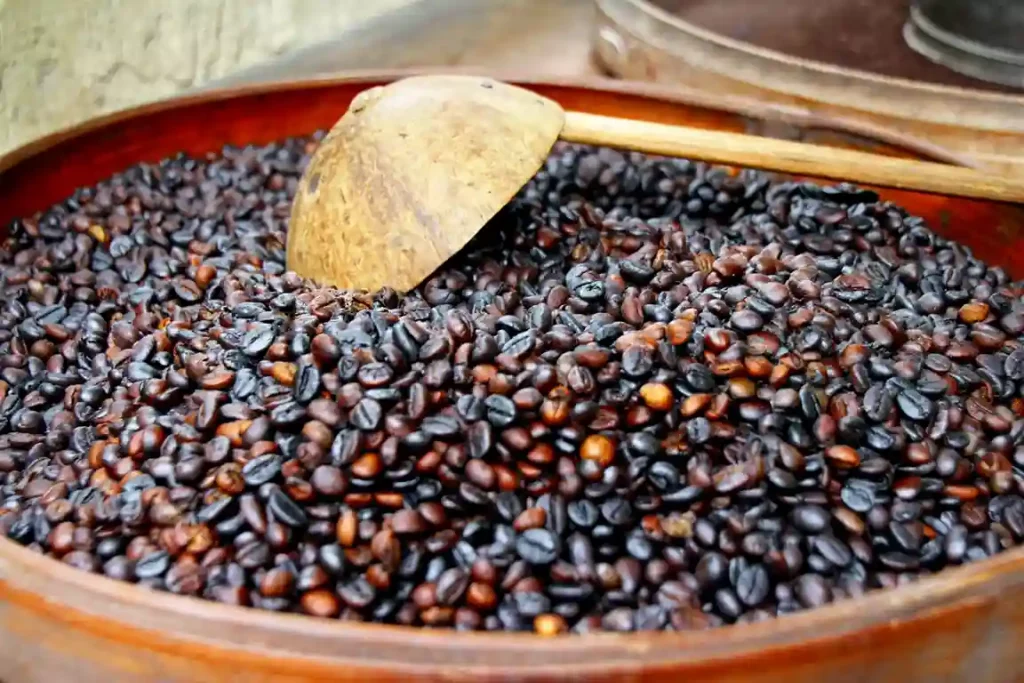
As for the legendary kopi luwak, produced from beans digested by civets, it now sparks an ethical debate; the focus is shifting towards traceability, animal welfare, and supply chain transparency.
7. Fine Dining and Sustainable Gastronomy in Bali
Beyond warungs, the Balinese gastronomic scene has reached an international level. The new generation of chefs places the environment at the center: locavore menus, organic vegetable gardens, sustainable fishing, valuing leaves and roots usually discarded. In these high-flying experiences, you can savor:
- A wild tamarind sorbet escorted by a cocoa leaf crumble and a fermented roselle coulis.
- A reef fish ceviche flavored with passionflower and enhanced with a long chili sambal aged in a jar for three months.
- A clear ray wing broth, infused with lemongrass, garnished with sea peas picked that very morning.
Molecular cuisine gives way to the pursuit of the lightest footprint: activated charcoal from coconut shells, palm syrup reduced over a wood fire, tableware crafted by local ceramic artisans.
8. Managing Your Stomach: Hygiene, Spices, and ‘Bali Belly’
Changing climate, water, and bacterial flora sometimes feels like a digestive marathon. However, a few basic rules are enough to fully enjoy culinary discoveries:
- Water: prioritize filtered or boiled water, even for brushing teeth, to protect your intestinal flora.
- Hands: thorough washing or hand sanitizer before each meal drastically reduces the risk of traveler’s diarrhea.
- Cooking: if steam is escaping from the wok and the queue is long, rapid food turnover guarantees freshness and safety.
- Probiotics: as a preventive measure, they help the body adapt to the new bacterial biodiversity.
- Rehydration salts: a small sachet from a local pharmacy prevents the discomfort of humid heat combined with an upset stomach.
Regarding spices, Balinese chili can be surprising: it heats less in the mouth than Thai chili, but its ardor sometimes arrives in a second, deeper wave. Start gently, let your palate adjust, then increase the dose: this is how you enjoy “sambal matah,” “salsa plecing,” or “sambal embe.”
9. Exploring Bali by Flavors Rather Than by Map
• Ubud – Nestled between rice paddies and jungle, this ancient artists’ village blends family warungs, cruelty-free cafes, and author’s cuisines sensitive to agroforestry. Here you can taste crispy tempeh topped with peanut sauce or a curry of wild herbs picked that very morning.
• Canggu – This southwestern coast attracts surfers, digital nomads, and creatives. From dawn to sunset, the aromas of sourdough bread, rainbow bowls, and coconut-scented grilled dishes mingle with the iodized vapors of volcanic beaches.
• Seminyak and Petitenget – More glamorous, more nocturnal, this area offers fusion cuisines where satay is transformed into tartare and cocktails infuse pandan, kaffir, and Timut pepper. International influence plays on a twist of Indonesian identity.
• Bukit and Uluwatu – The limestone cliffs and mythical waves inspire direct seafood cuisine: whole grilled fish of the day, fresh seaweed sambal, coastal herb salad eaten while watching the sun set into the ocean.
• North Bali – Less frequented, the northern coast reveals a cuisine where cloves, vanilla, and cocoa grown nearby infuse the dishes. Here you can share clear catfish soups, blue crabs cooked in papaya leaves, and skewers of young bamboo shoots.
By moving between these areas without relying on a list of ready-made addresses, travelers learn to choose a place by observing: the number of parked motorbikes, the composition of the clientele (local families, artisans, fishermen), the smell emanating from the fire. Intuition and curiosity then replace the fixed map.
Let Curiosity Lead the Culinary Dance to Enjoy Your Bali Vacation
Bali rewards those who dare to step through the door of an unknown warung, taste a scarlet red sambal, or toast with a local espresso in an impromptu roasting workshop.
Even if you are going on a family vacation to Bali or with friends, dare to venture off the beaten path and classic guides to try a sensory experience.
The island offers a mosaic of tastes: from crispy pork laden with religious symbols to the most minimalist dragon fruit smoothie, including a sensory tasting of high-altitude coffee.
The secret is simple: proceed with respect – for traditions, for producers, for your own body – and let your gourmet desires trace the map of encounters. Without ready-made addresses, without predictable bills, Balinese cuisine becomes a permanent treasure hunt. Every scent, every fried rice, every burst of palm sugar reminds us that taste is a universal language: a dialect where we understand each other without words, just with a smile, trust, and a hint of chili. Selamat makan!