 Skip to content



One sometimes hears that “Bali is no longer what it used to be.” The island is said to have lost its authenticity, swallowed by mass tourism and social media. However, reducing Bali to this saturated image would mean missing out on what still—and more than ever—constitutes its richness: an intact culture behind the modernity, living traditions at the heart of daily life, and a population that continues to combine spirituality, hospitality, and a sense of community. Behind the clichés, Bali remains a world apart, where beauty is measured less in filters than in human experiences.
1. Discover Bali’s heritage, which is still in full swing
The cultural heritage of Bali’s subak was inscribed as a UNESCO World Heritage site in 2012.
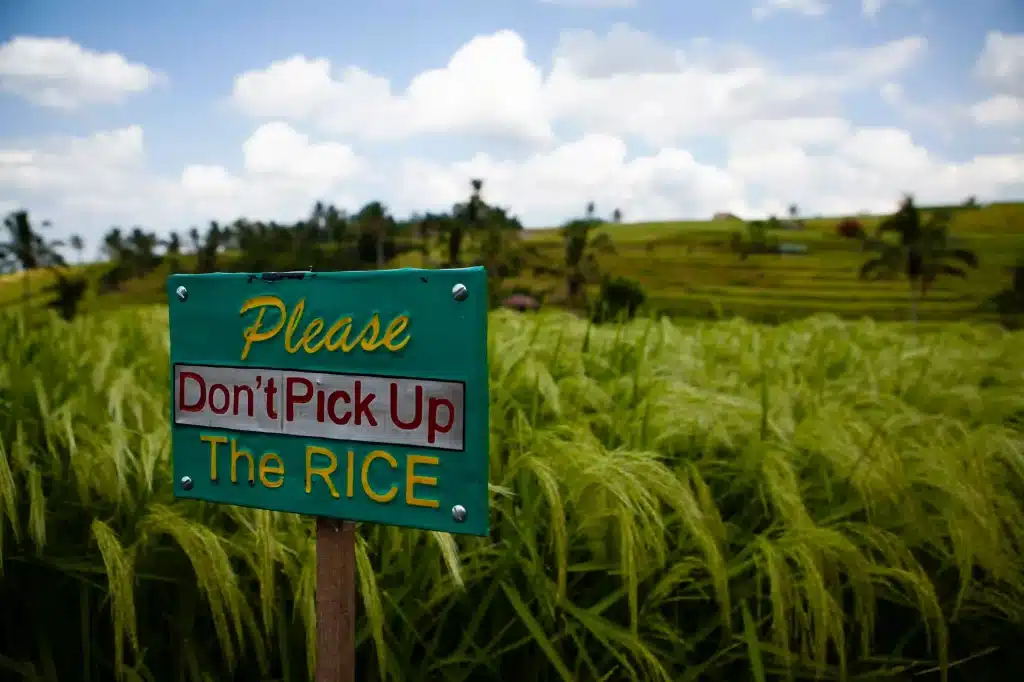
The subak irrigation system, 19,500 hectares of terraced rice fields orchestrated since the 9th century, is not a frozen backdrop: it irrigates some 1,200 agricultural cooperatives every day. Founded on the principle of Tri Hita Karana (harmony between the divine, humans, and nature), it illustrates the Balinese capacity to keep a tradition alive while feeding the population.
2. Bali’s landscapes: go from the sea to a volcano in one hour
Sip a coffee on Sanur beach at dawn, then climb Mount Batur (1,717 m) to watch the caldera catch fire, and finish the day in Amed to dive the Liberty Wreck. Few destinations offer such a density of microclimates and outdoor activities within such a small radius.
3. Living in the present moment: the philosophy of “jalan-jalan”
For the Balinese, “jalan-jalan” (or melali) literally means “to go for a walk,” but it is above all a way of life: strolling for pleasure, without a goal or time constraints, simply to “breathe.” Families readily dedicate their Sundays to this peaceful wandering, often enhanced by an improvised picnic at a temple or by a river. Local studies on work-life balance show that the population regularly ranks “quality of shared time” above material income, a sign of a true priority given to the present moment—a concrete antidote to Western stress.
4. Bali is a living laboratory of “living together”: banjar and gotong-royong
Each village is structured into banjar, neighborhood councils where decisions are made regarding ceremonies, material solidarity, and conflict resolution. The principle of gotong-royong (“putting hands together”) applies to a rice harvest as much as to a funeral. Travelers who participate in a subak walk or a community chore experience firsthand a society where collective identity takes precedence over individualism.
5. Bali, a global wellness hub (and it’s not just a slogan)
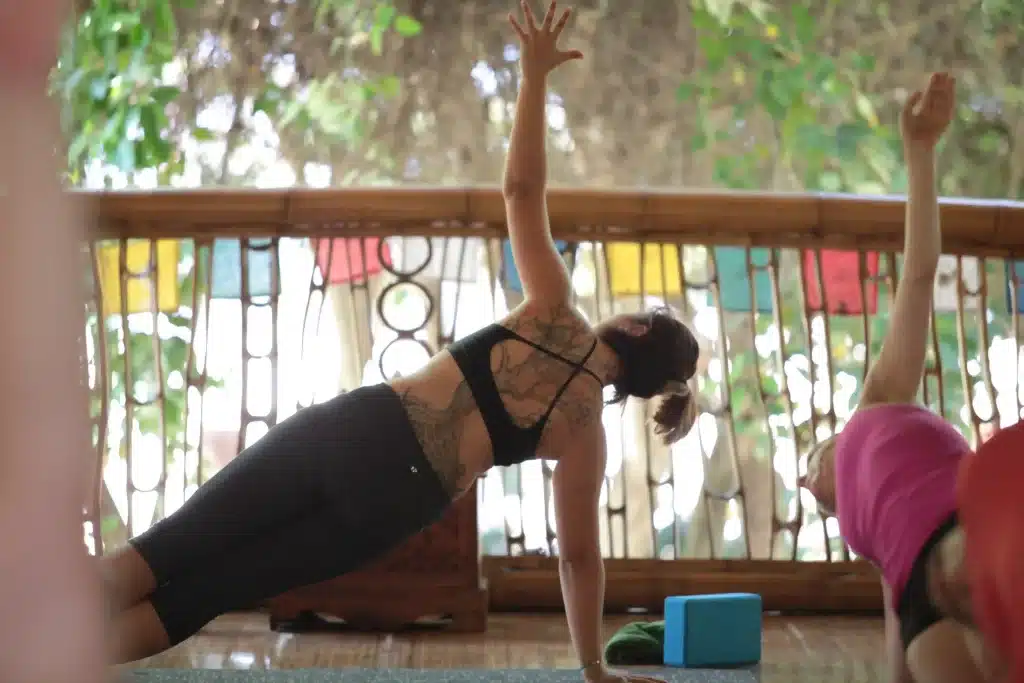
More than 500 mind-body establishments are listed in Ubud alone: yoga, sound meditation, Ayurveda… The BaliSpirit Festival will celebrate its 17th edition in May 2025 with 7,000 participants from 60 countries. This density of offerings, coupled with the natural setting, makes the island an epicenter of wellness tourism. If you wish to discover Bali as part of a wellness retreat, you are certainly in the right place.
6. Daily ceremonies that make the spiritual concrete
From small offerings (canang sari) placed ten times a day to the major Galungan-Kuningan cycles (next edition: October 5, 2025), Balinese Hinduism sets the pace for schools, businesses, and roads decorated with bamboo penjor. Experiencing these festivals from the inside means understanding how religion cooperates with social life rather than hindering it.
7. Balinese gastronomy that goes far beyond smoothie bowls
The babi guling (roasted suckling pig) has been featured in the TasteAtlas Top 100 since June 2025, confirming Anthony Bourdain’s verdict: “the best pig ever.” Add sate lilit skewers, basa gede sauce, and Kintamani coffees roasted over coconut shell fires: the island holds its own against foodie capitals.
8. A life lesson: in Bali, education and respect for elders are paramount
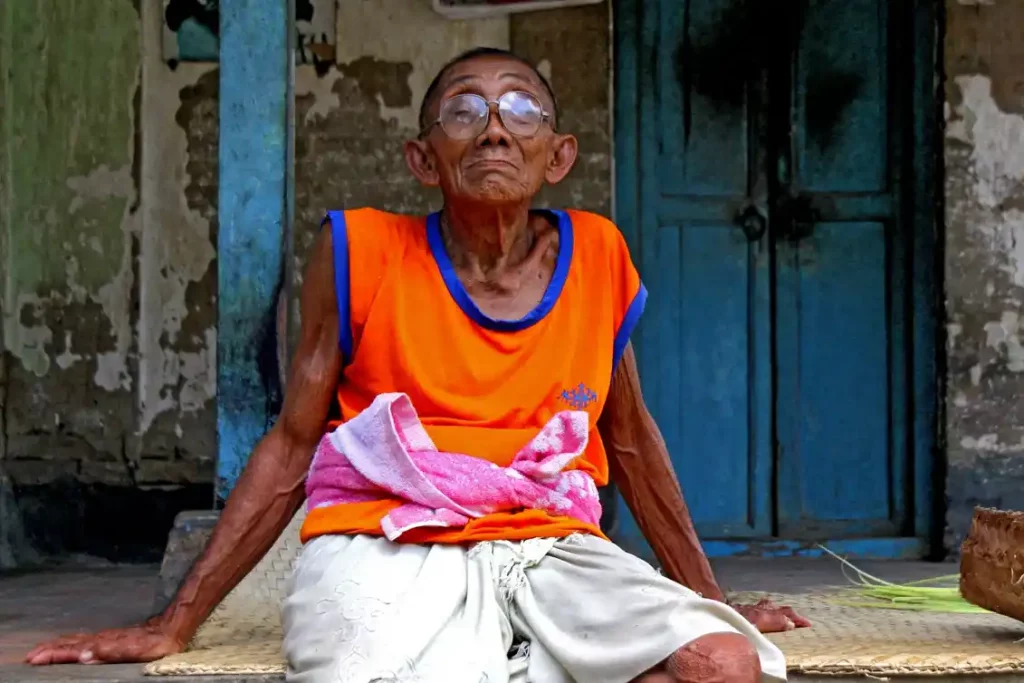
The Balinese family unit instills respect for elders (semen suhun) from childhood. Grandparents often live under the same roof, passing on mantras and mythological tales; the youngest learn to fold palm leaves for offerings or to pray before every meal.
Recent research highlights the consistency of this education: day after day, at school as at home, the family repeats the values of gratitude and harmony, creating a sense of belonging that lasts into adulthood. For a family trip, observing or sharing these rituals offers children a lesson in civic duty and intergenerational respect rarely seen in our latitudes.
A family trip to Bali is therefore a rich experience that will bring young and old together and even educate them.
9. Discover playgrounds for adventurers: surfing, diving, trekking
Nearly 40 spots—Uluwatu, Keramas, Medewi…—ensure waves almost 365 days a year. Underwater, the USAT Liberty wreck (5-25 m) can even be explored by snorkeling, ideal for beginners or photographers. Add canyoning, mountain biking, and ridge trails: athletes will not soon wear out their shoes.
10. Discover Bali in complete safety thanks to special tourist measures
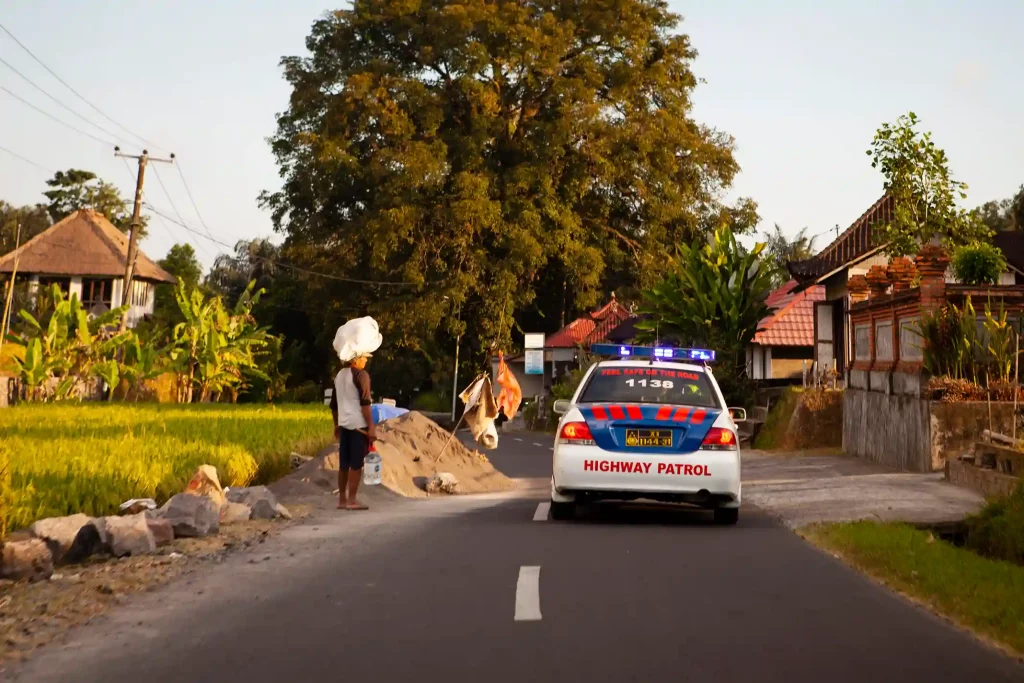
Crimes remain essentially minor thefts. The Tourist Police patrol busy areas; in 2025, Circular No. 07 strengthened fines and deportations in cases of violence or disrespect toward sacred sites. As a result, violent crime targeting travelers remains rare, and most Western embassies still classify the risk as “very moderate.”
11. BONUS: Discover Bali with Amanaska
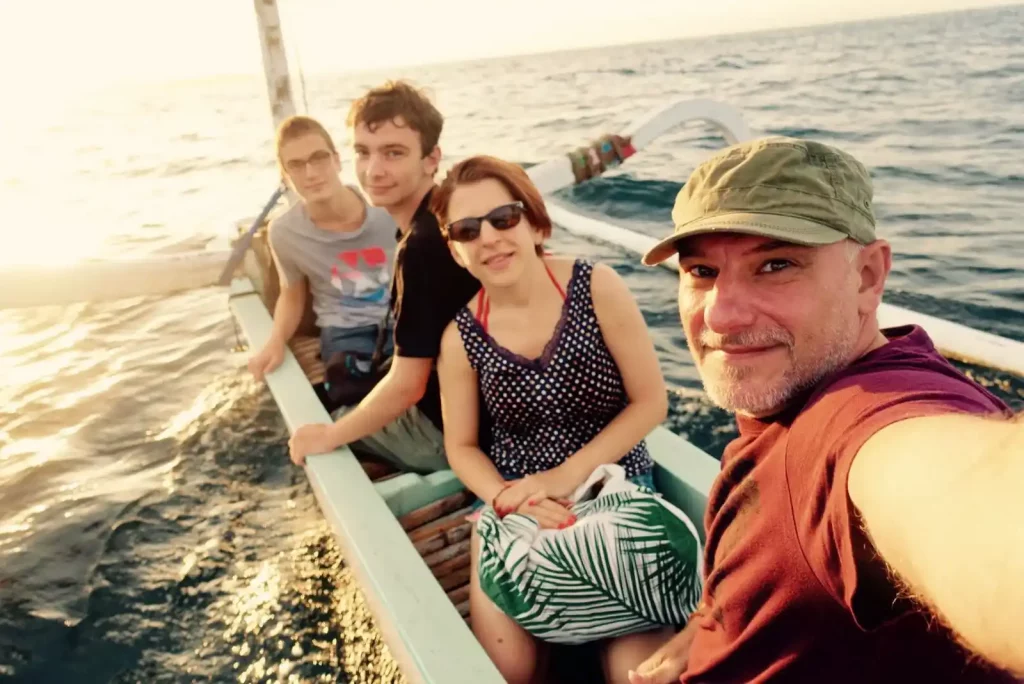
Bali is not just a postcard, and discovering or rediscovering the island with Amanaska is undoubtedly one of the best things you can do!
Bali is a cultural and social ecosystem where wandering without a goal (jalan-jalan), the village council (banjar), family cohesion, and environmental commitment combine to produce a palpable quality of life. This is what we offer to share and experience with every family or group of friends who entrust us with their stay.
These eleven reasons, supported by recent data and studies, show that the island is simultaneously a wellness laboratory, an adventure playground, and a school of mutual respect—provided, naturally, that one explores it with curiosity and consideration. So, when will it be your turn?