 Skip to content



Preparing for a trip to Bali is not only about choosing the most beautiful beaches or mapping out the ideal itinerary; it is also about understanding the social codes that shape island life. Adopting a few simple habits immediately transforms the way you travel: Balinese people feel your consideration, and the exchange becomes deeper. Here are 15 gestures—neither costly nor complicated—that we always recommend to Amanaska travelers who are going on a family tour in Bali.
Here are 15 signs of respect that will earn you the gratitude of the Balinese and make for a most enjoyable stay.
1. Greet with hands pressed together (salam hormat)
A Western “hello” is rarely enough to convey the respect owed to a Balinese host. Press your palms together at chest level and slightly bow your head: this salam hormat means “I acknowledge the divine in you.” Elders are particularly sensitive to it.
2. Use your right hand to give or receive
In Bali—as throughout the archipelago—the left hand is considered impure. Offering money, a passport, or even a small souvenir with your right hand (or with both hands if the item is bulky) is therefore a primary marker of good manners.
3. Remove your shoes before entering a Balinese home
Whether you are invited into someone’s home (or entering a temple pavilion), take off your sandals at the door. Balinese people separate the outside (often dusty) from the sacred or family interior.
4. Wear a sarong and a selendang at the temple
During your tour in Bali, you will be led to stop and visit many temples or places of worship. Even for a ten-minute visit, be sure to wrap a sarong around your waist and add a thin sash (selendang) over your hips. Temples sometimes provide these items in exchange for a donation, but having your own set helps you avoid queues.

5. Never touch a Balinese child’s head
In Balinese cosmology, the head is the seat of the soul; placing your palm on it, even affectionately, is seen as disturbing protective spirits. Bow to greet or congratulate, but keep your hands at shoulder level.
6. Avoid pointing with your finger
A pointed finger expresses anger. Instead, indicate an object or place with the back of your hand, palm open, or use your folded thumb. Local guides do this naturally—follow their example.
7. Sit lower than the priest or the elder
During a ceremony, identify the seat of honor—often a raised mat—and choose a lower place. Balinese people immediately perceive your awareness of family hierarchy.
8. Taking photos in Bali: ask for permission
Before raising your camera, ask “Boleh foto?” (“May I take a photo?”). Dancers, artisans, and even children will appreciate your care not to turn their private lives into a postcard backdrop.

9. Politely but firmly refuse single-use plastic
A small fabric bag tucked into your backpack is enough. Vendors smile when a visitor refuses the plastic bag and pulls out a tote bag: you show that the island matters to you.
10. Use a moderate tone
Verbal anger is frowned upon. Even if there is a misunderstanding about a price, speak calmly. In Bali, losing emotional control brings shame. Calm negotiations almost always lead to a fair compromise.
11. Place a canang sari after a cultural activity
If you attend a batik or cooking class, ask to prepare (or buy) a small canang sari offering and place it on the workshop’s small altar. This gesture links your energy to that of the place—something our guides cannot recommend enough during your family or friends’ trips.
12. Ride slowly and honk as a precaution
On a rental scooter, never overtake a truck on a bend, and honk briefly to warn—this is an audible alert language, not aggression. Riding peacefully protects pedestrians, dogs, and your karma.
13. Leave a discreet tip
In family-run warungs, round up the bill by a few thousand rupiah. You do not display the money: you slip it into the box or under the spoon rest. Discretion is part of Balinese elegance.
14. Sort your waste symbolically
Even when there is no recycling bin, take your batteries, empty sunscreen bottles, or drone batteries home in your return luggage. A strong signal: you refuse to leave on the island what it cannot recycle.
15. Learn three Balinese words
Say “Suksma” (thank you), “Ampura” (sorry), and “Rahajeng semeng” (good morning): in one sentence, you show the effort to go beyond basic Indonesian. Smiles widen immediately, and you may already be invited to taste homemade coffee.
Why do these gestures change your trip to Bali?
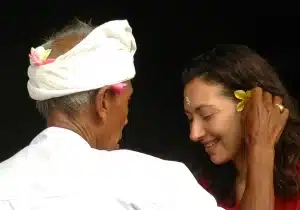
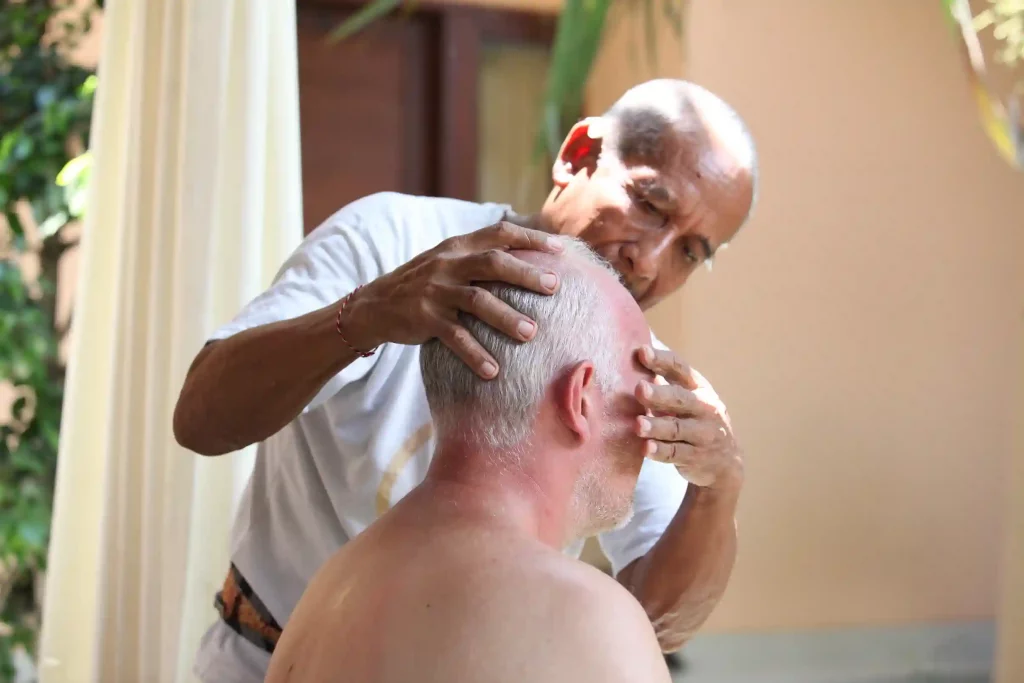
Adopting these habits literally opens doors: a vendor shares the recipe for sate lilit, a grandmother invites you to see her altar, a priest blesses you with an unexpected tirtha. Whether you are visiting Bali for the first time or repeating a family tour, the human experience then goes far beyond a simple tourist visit.
Amanaska always recommends reflecting on the invisible impact of every action: the right hand, the sarong, the lowered voice are symbolic keys that show you honor Balinese balance (Tri Hita Karana). And because respect fosters reciprocity, these keys create encounters that no itinerary can guarantee.
In practice: incorporating these gestures into your itinerary
- Before departure: add a sarong and a tote bag to your suitcase.
- During the journey: practice your three Balinese words.
- On site: observe your guide, imitate their gestures, and use your right hand.
- On your return: share the value of these gestures. You will, in turn, become an ambassador for gentler tourism.
Respecting Bali is not about multiplying formalities; it is about weaving a thread of small attentions each day. Follow these fifteen gestures and the island will thank you in the most beautiful way: with a sincere welcome, warm exchanges, and the lasting feeling of having been part—even briefly—of its harmony. Selamat jalan!