 Skip to content



Or why there are so many Wayans, Mades, Nyomans, and Ketuts: The Balinese naming system explained (origin, birth order, and contemporary mutations)
In Bali, a first name already tells your place in the world
In Bali, simply hearing “Allow me to introduce Wayan” is enough to know that your interlocutor is likely the eldest of their siblings. A first name is not a simple aesthetic choice; it indicates family chronology, hints at the social role the person will play, and reflects centuries of community organization.
For travelers with our travel agency in Bali, this initially causes amusement. How can one remember so many Wayans? Then comes a growing interest: behind these repetitive names lies the invisible structure of a culture that places belonging before the individual.
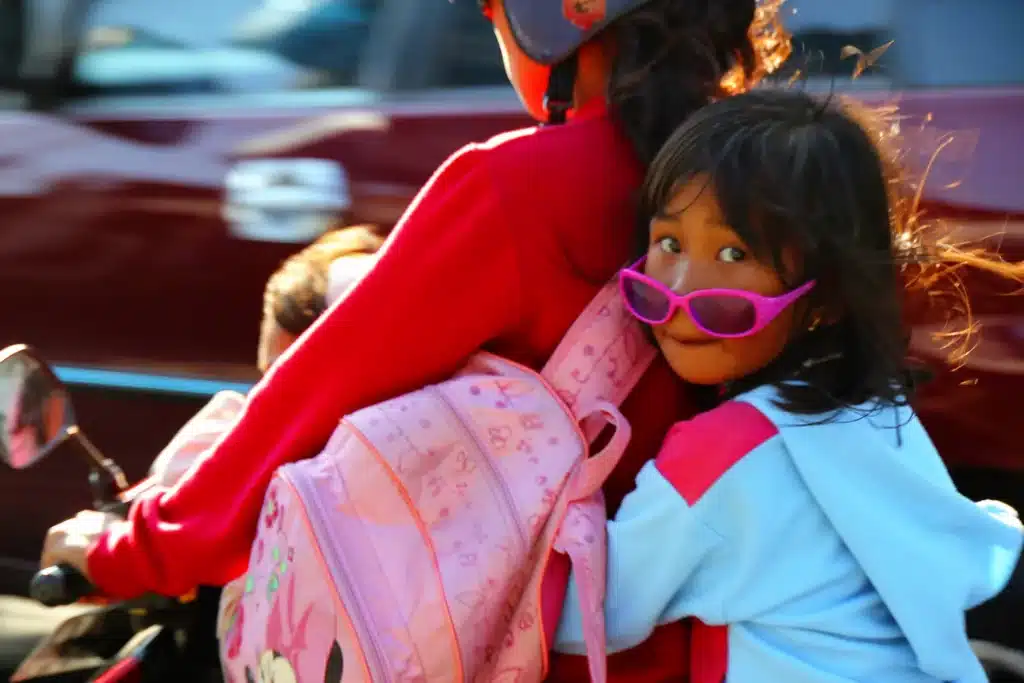
The basic principle when discovering Bali and its names: four names for four births
The most well-known rule is simple:
- Wayan (or Putu, Gede) designates the eldest.
- Made (or Kadek, Nengah) is given to the second child.
- Nyoman (or Komang) goes to the third.
- Ketut is reserved for the fourth.
With the fifth child, the cycle begins again; they are called Wayan once more, sometimes accompanied by the word Balik (“return”) to mark the loop. This system applies to the vast majority of Balinese people across all castes and is rooted in local cosmology: birth order reflects the four cardinal points and the four stages of life.
Variations of Balinese names according to caste: Brahmin, Satria, Wesia, and Sudra
The pattern becomes more complex for travelers with our travel agency in Bali when considering the catur varna (four major social categories). The Sudra, representing about 90% of the population, use the classic Wayan–Made–Nyoman–Ketut series. Noble castes prefer distinctive prefixes:
- The Brahmin (priests) add Ida Bagus for men and Ida Ayu for women: Ida Bagus Made therefore indicates a second son of the priestly elite.
- The Satria (warriors, princes) use Anak Agung or Cokorda. A third princely child will become Anak Agung Nyoman.
- The Wesia (merchants, administrators) sometimes use I Gusti, especially in Karangasem and Klungkung.
Despite these variations, the Wayan–Made–Nyoman–Ketut order remains untouched; only the prefix indicates the lineage.
Other clues provided by the Balinese first name
A Balinese first name reveals at least two other pieces of information:
- Gender: a final vowel “e” or “u” often marks femininity. Thus, one encounters Ni Wayan Puspa (eldest female) compared to I Wayan Putra (eldest male). The particles I (masculine) and Ni (feminine) sometimes precede the name, especially in rural areas.
- The clan: after the birth order name comes a surname or a nickname linked to the village, ancestors, or a characteristic trait: Wayan Suastika (“one who brings prosperity”) or Made Negara (from the hamlet of Negara).
Mythology and social function of birth order: key elements for discovering an authentic Bali
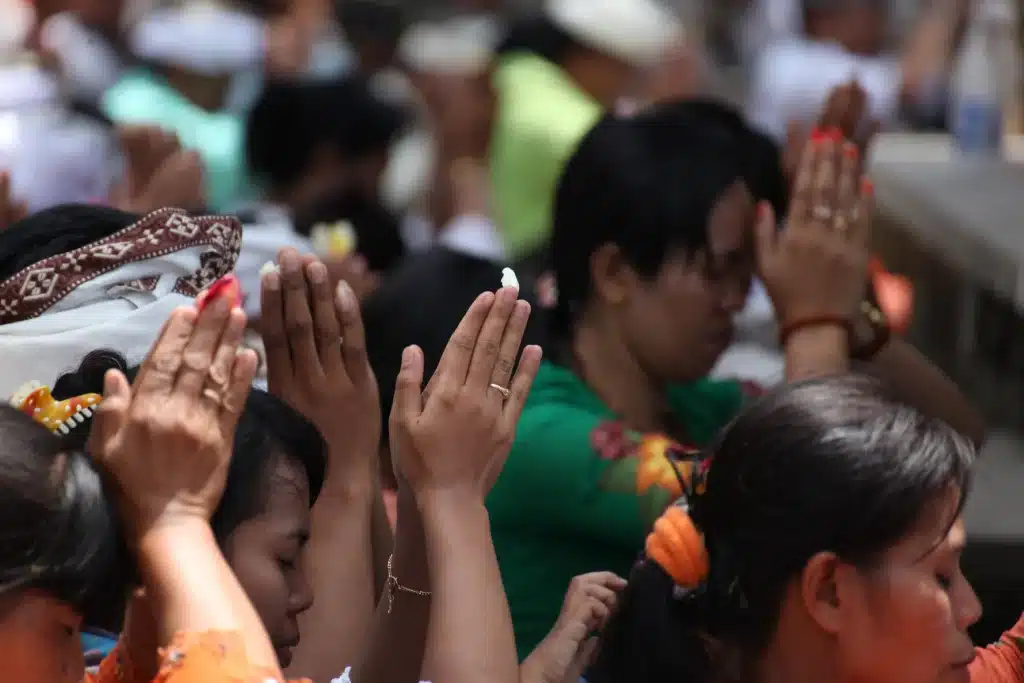
In Hindu-Balinese tradition, siblings reflect the cosmic hierarchy. The eldest (Wayan) represents Mount Agung, the axis of the sacred; they therefore bear the spiritual responsibility of the home. The second (Made) symbolizes the sea, linked to trade and change: they are expected to manage family logistics. Nyoman embodies the forest, the space of mediation between mountain and sea; they are often the most diplomatic. Ketut corresponds to the cultivated field, a place of transformation; they are meant to consolidate bonds and perpetuate traditions. These associations, though less explicit today, continue to influence upbringing: Balinese parents readily remind each child of their “natural role” during major decisions.
How the system still guides daily life in Bali
Addressing a child by their rank is commonplace: “Gede, come eat!” In a school classroom, one therefore distinguishes between several Gedes or Putus, and the teacher adds the surname to avoid confusion. At work, a Wayan instinctively expects to be consulted first, and a Ketut knows they will have to work twice as hard to gain the floor. This reality extends even to local politics: the heads of banjar (village councils) are often the eldest.
Balinese names adapting in modern ways: double names, creative spelling, and foreign influences
Tourism development and the Indonesian civil registry have caused nomenclature to evolve. Many parents add a “global” first name after the birth order name: Wayan Jonathan or Ketut Maria (yes, even for males!). The goal: to facilitate administrative procedures outside of Bali and give the child a flexible identity on social media.
Fanciful spellings are also appearing: Weian, Mhaedé, a way to stand out in an ocean of duplicates. Expatriate Balinese sometimes shorten the prefix: A. A. Nyoman Sri for Anak Agung Nyoman Sri. In Singapore or Sydney, it is not uncommon for a Komang to sign as “Kay” to avoid easy jokes.
Impact of birth control in Bali on the presence of Ketut
In the 1990s, the Indonesian family planning policy “Dua Anak Cukup” (“Two children are enough”) reduced average sibling sizes. Result: fewer fourth births, and thus fewer Ketuts. Adult Ketuts often joke: “We are an endangered species.”
Some couples persevere until the fourth baby to preserve the lineage; others bypass the rule by using Nyoman or Ketut regardless of rank, which blurs the reference points.
Special case: names in mixed Balinese families
Marriages between Balinese and Javanese, Australians, or Europeans challenge the system. Two trends are emerging:
- Preserving tradition: Ni Made Claire proudly carries her dual heritage.
- Merging: the couple chooses an international first name and places the birth rank in the middle: Claire Made Sutrisna.
Balinese authorities are flexible; national identity is based on the legal name, not on tradition. Nevertheless, the village community continues to name the child according to the unofficial order.
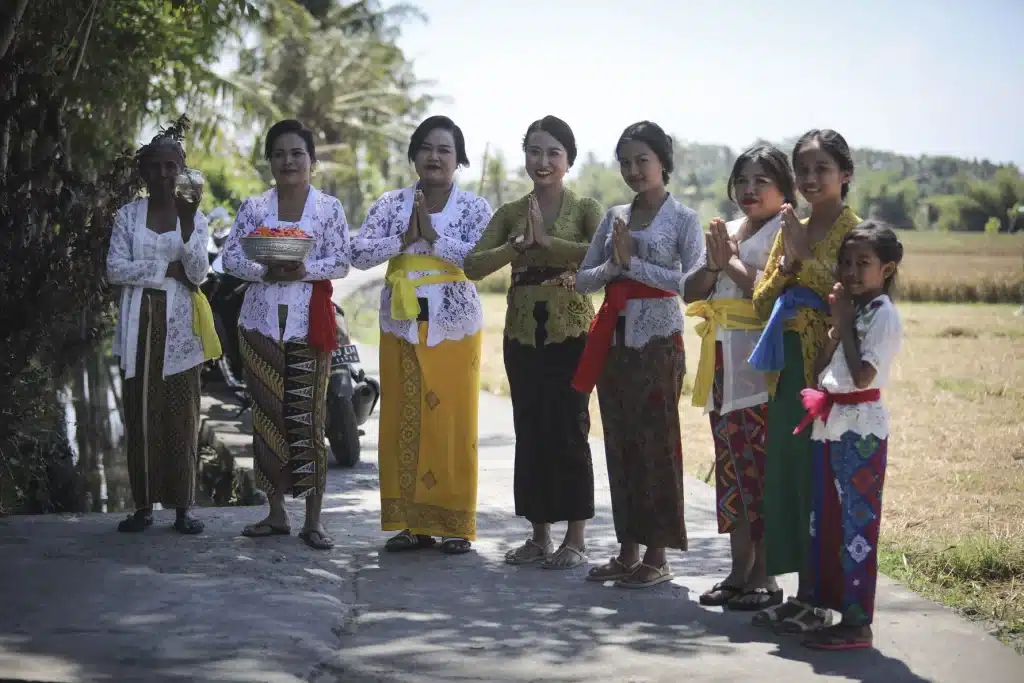
Visitor confusion and politeness tips by Amanaska
The newly arrived tourist is surprised: how to navigate a hotel team where four employees are named Wayan? The trick: memorize the second name or the professional nickname (Made “Chef”, Nyoman “Yoga”, Ketut “Driver”).
When you greet someone, use their rank followed by an affectionate term: “Selamat pagi, Pak Made”. Show that you know the custom; the conversation will open up immediately.
First names and search engines: an SEO headache
For a Balinese business wishing to optimize its online presence, having ten Facebook profiles named Wayan Artana poses a problem. Entrepreneurs therefore add a unique identifier: WayanArtanaUbudChef. Tour guides, meanwhile, highlight their specialty: KetutSurf or NyomanDiveMaster to stand out on Google. Balinese names force digital creativity; it is a microcosm revealing the collision between tradition and globalization.
What do the younger generations say?
Questioning a middle school student in Denpasar reveals a certain annoyance: “Everyone has the same name; it’s confusing on Instagram.” Yet, few completely abandon the system. They shift it: on social networks, the rank serves as a collective pseudonym; at the top of a CV, it testifies to a strong Balinese identity. Hashtags like #TeamKetut or #SecondBornMade are emerging, proudly reaffirming birth order.
The legal dilemma: unique name on the identity card
Indonesian law requires a Nama Lengkap (full name). Balinese people must therefore combine rank, surname, and sometimes caste name: I Wayan Purnama Putra.
On an international airline ticket limited to 23 characters, this becomes IWayanPurnamaPutr. Since low-cost airlines strictly enforce name matches, many passengers have found themselves blocked at check-in. Balinese agencies now advise keeping exactly the name that appears on the passport, even if a letter is missing.
The naming system in Bali is in motion, but not about to disappear…
Between globalization and local identity, Balinese nomenclature continues to evolve. Authorities have no plans to abandon it; it would be unthinkable to break the symbolic link that connects each family to the cycles of life. Most young people will likely agree to append an “international” first name, but Wayan, Made, Nyoman, and Ketut will remain, like the heartbeat of a culture that reinvents itself without ever ceasing to remind us: “I am from Bali, and my rank in the family already tells a part of my destiny.”
So, during your touring holidays in Bali with us (the right choice) or at a resort (which is good but not great), when your driver tells you his name is Wayan, remember that he carries more than a name; he embodies the memory of a cosmic order where every birth naturally finds its place.