 Skip to content



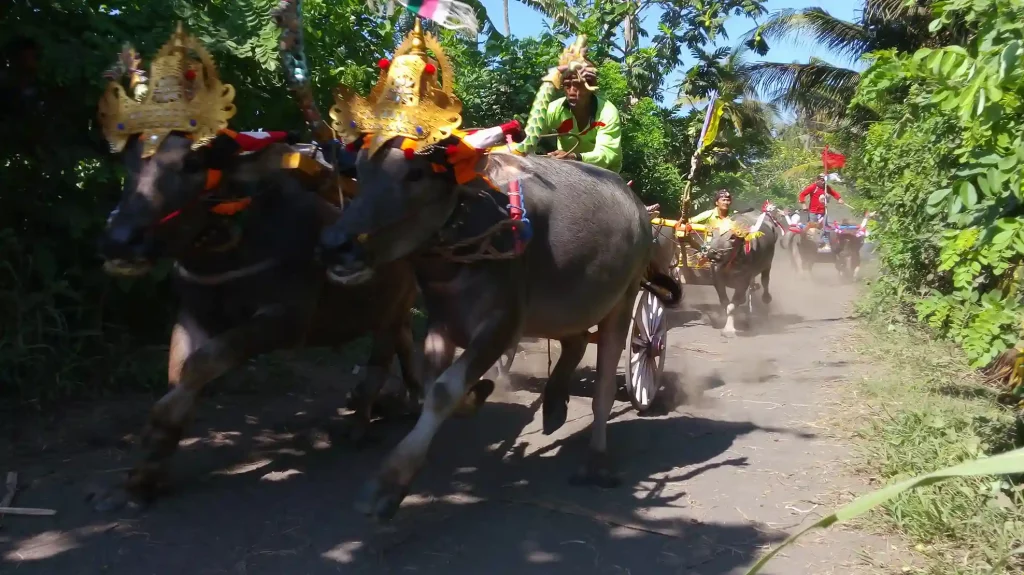
The only race where two tons of muscle, a muddy furrow, and a jockey standing on a sled compete for glory at dawn. It’s a spectacle to discover, offered by rare travel agencies in Bali like ours to their travelers, as this tradition remains little known.
Have you ever imagined a buffalo speeding at nearly 50 km/h, with a red mane flying in the wind, gliding over a rice field dike as fast as a scooter?
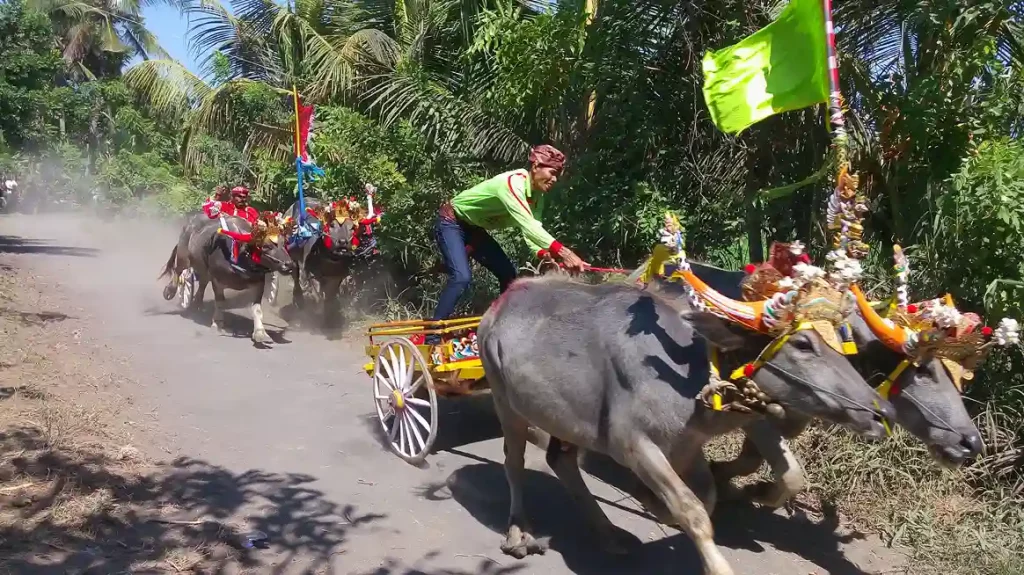
Why do Balinese farmers, every weekend from July to November, transform their draft animals into sprinters adorned with gold and bells? And how did a competition born to speed up field work become one of the most popular events in West Bali?
Welcome to Makepung, the “mud-raising race,” in the Negara region (Jembrana Regency). If you are looking for an authentic local experience, far from crowded beaches, read on: behind the jockeys’ shouts and the thundering hooves lies a story of migration, peasant cooperation, and deep respect for animals. As a travel agency in Bali specializing in cultural immersion, we often take our travelers there under privileged conditions…
Origin of Makepung: from plowing to competition
Balinese historians attribute the birth of Makepung to Madurese migrants who arrived in Jembrana in the early 20th century. Eager to prepare flooded fields faster, farmers used to challenge each other in the late morning: the pair of buffaloes (kerbau) that finished the plot first won a meal offered by the neighbor. This friendly rivalry grew after World War II, when the dikes were widened and an improvised circuit – 1 km out, 1 km back – was traced along the Ijo Gading River.
In 1964, the Regent of Jembrana formalized the practice: the term makepung (“to make mud splash”) appeared in a local decree, and two leagues were created:
• Ijo Gading Barat (West) – green color, symbolized by a ribbon on the halter
• Ijo Gading Timur (East) – red color
Every year, the winners of each series compete for the Governor of Bali Cup in November.
Practical Organization
The Calendar
• Training: from May, at 6:00 AM, three times a week
• Qualification Races: every Sunday, mid-July to late September
• Final Series: first or second Sunday of November (date published by the regency)
The Racetrack
The main circuit, Sangyang Cerik (5 km east of Negara), measures 2 x 1,100 m, on dirt and dikes. The turns are banked; water still surfaces after morning irrigation.
The Teams
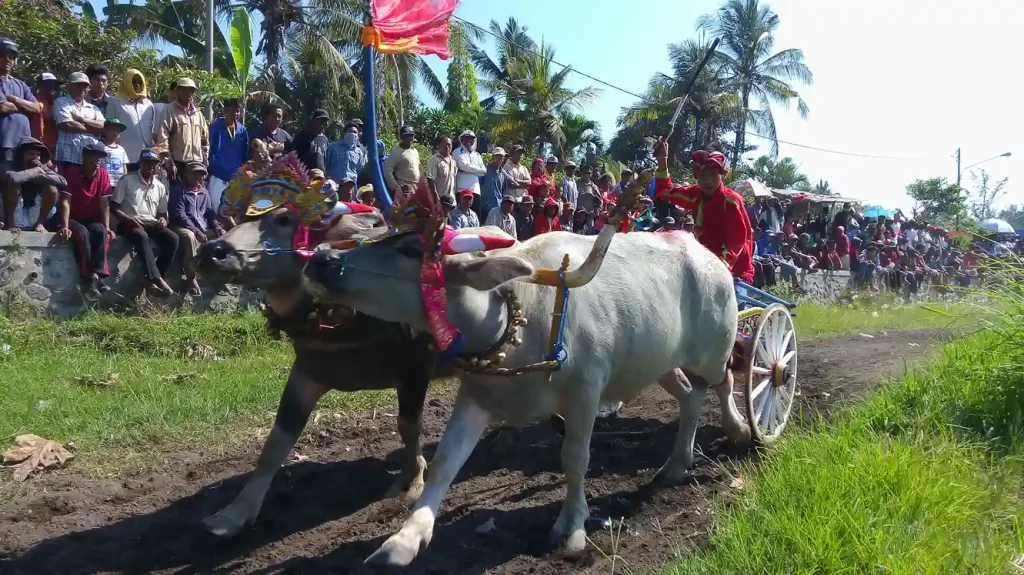
Each owner fields a pair of male buffaloes (kaleles) connected by a bamboo yoke and a small plow-chariot (cikar) transformed into a platform. The jockey (always standing) steers with a long rattan stick; two assistants follow on motorcycles to spray the animals and tighten the halters.
The Goal and Essential Rules
• Start in pairs; the first pass at 500 m serves as a photo finish
• Time: a buffalo can cover one km in 1 min 20 s, or ± 45 km/h
• Weight: the sled must not exceed 75 kg, jockey included
• Whistle: if one of the animals limps or refuses to run, the heat is stopped to avoid injuries
Since 2016, an independent veterinarian examines each animal before the race: temperature, blood sugar, and absence of doping substances (glucocorticoids prohibited).
Respect and Preparation of the Buffalo
Unlike bullfights or bloody contests, Makepung is based on care:
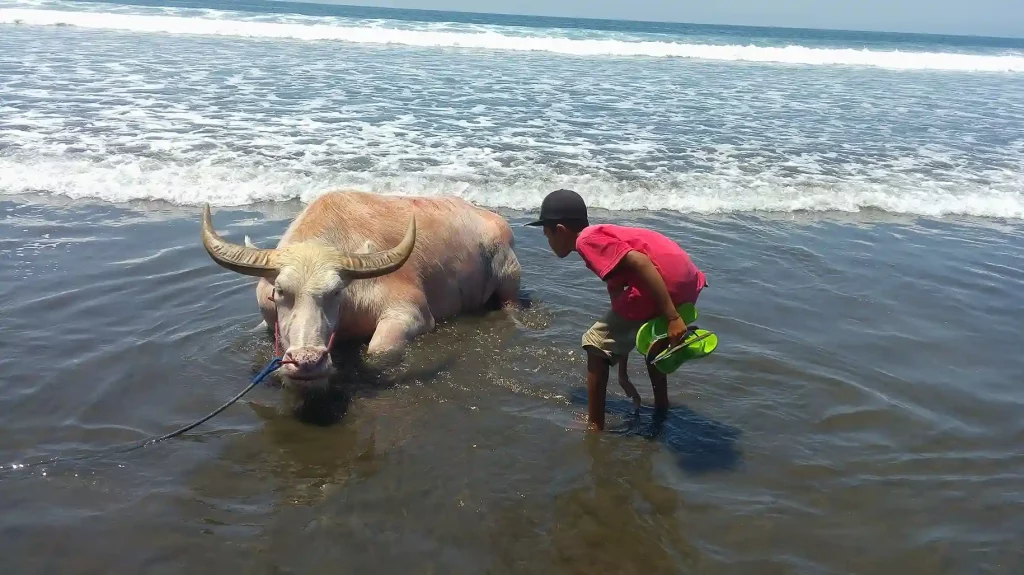
• Feeding: fresh grass, coconut water, and a mixture of boiled red rice
• Massage: every evening, heated betel leaves applied to the legs
• Decoration: horns sheathed in gold fabric, peacock feathers, brass bells
The local association Persatuan Kerbau Jembrana reminds that striking outside the authorized zone (upper thigh) results in a six-month disqualification.
Competition and Economic Stakes
A champion pair can be worth 200 million IDR (≈ €12,000). Bets remain unofficial: wagers are made “over coffee” or as donations to the temple.
For Negara farmers, winning enhances the prestige of the banjar and attracts curious travelers to Bali; each food stall sells up to 500 portions of sate lilit per morning. The regency estimates that the Makepung season generates over 2 billion IDR in local economic benefits.
Practical Tips for Visitors
• When to visit Bali for Makepung? Mid-July – November, preferably August-September
• Access: 3 hours from Denpasar (Ubung–Negara bus)
• Attire: waterproof sandals, hat
• Respect: no flash at the start, children behind the barrier
Striking Example: 2019 Final
The pair “Si Bintang & Si Wulan” (Ijo Gading Timur) broke the track record in 1 min 17 s. The breeder, Pak Gede Budi, reinvested the prize money in a tiled, ventilated shelter for his buffaloes, showing that competition also benefits animal welfare.
Beyond the Spectacle: A Marker of Balinese Identity
For West Balinese, Makepung is neither folklore nor horse betting: it is a communal ritual based on three key values:
• Gotong-royong – mutual assistance: collective construction of the chariot
• Respect for livestock: the buffalo, partner in rice farming
• Local pride: defending the color of one’s banjar without lasting hatred
As ethnologist Jean Couteau points out, Makepung channels virile energy away from land conflicts.
Discover Makepung during your stay in Bali?
Attending Makepung is like reading a living chapter of Balinese agriculture: transforming a practical need into a celebration, seeing animals honored, and measuring the local economic impact.
For visitors discovering Bali, it’s an opportunity to escape classic itineraries, feel the mud splash, and finally understand what it means to “work with animals” rather than “exploit them.” Ready for the next season? The jockeys are sharpening their rattans… So do not hesitate to contact us to prepare a family trip to Bali worthy of the name with you, there, in the early morning, among those who will see the buffaloes