 Skip to content



Many of you contact our travel agency to discover Sulawesi. While the island of Sulawesi is appreciated for its biodiversity, diving sites, cuisine and landscapes, today we invite you to discover this magnificent island through its colourful origins…
The history of Sulawesi
The history of Sulawesi is inseparable from that of the people whose traces date back more than 40,000 years, notably with paintings found in the Maros-Pangkep caves. Excavations carried out in the Leang-Leang caves, located in the Makassar region, have identified a human presence dating back to 3000 BC.
From China, the Philippines and other distant lands, each people arrived with its own culture and adapted to an often hostile environment, transforming not only their living conditions but also their traditions, enriched by local beliefs.
The first Westerners to discover the island were the Portuguese, who landed in 1525 in search of gold. With the spice route, the Dutch arrived in 1605, followed closely by the British.
Southern Sulawesi was long the scene of clashes between two states: Bone, the Bugis kingdom, founded by Manurungnge Rimatajang in 1330, and Gowa, a princely state whose capital was located south of Makassar. Both had a reputation for being formidable warriors. The kingdom of Makassar became the most powerful and began conquering its neighbours, becoming by around 1540 an essential commercial player. Converted to Islam in 1605, the king of Gowa sought to impose this faith on the rest of the island, but the Bugis refused. A war followed until 1611, when the entire region was forcibly converted.
Taking advantage of this troubled period, the Dutch East India Company (VOC) truly established itself in Makassar in 1609, built a trading post there, and then came into conflict with Gowa in 1660 following commercial disagreements.
During this period, Arung Palakka, prince of the Bugis kingdom of Bone and warlord, organised a revolt. When it was suppressed, it brought him closer to the Dutch. The tensions and wars fuelled by the VOC pushed Makassar and Bugis sailors to flee southern Sulawesi and become formidable pirates who roamed the seas as far as Bali. In 1667, the Treaty of Bongaya granted the VOC control of regional trade.
During the Napoleonic Wars, the British and the Dutch made agreements and then cancelled them. In 1825, the Dutch, aided by Gowa (a former enemy), defeated the forces of Bone. Hostilities ended in 1905. The VOC took advantage of this to subjugate the Toraja country and the entire island.
It was only in 1949, after the Japanese occupation during the Second World War, that Celebes became a federal state of the Republic of the United States of Indonesia, and then, in 1950, a province of the unitary Republic of Indonesia.
The Bugis people
As we have just seen, the Bugis wrote a large part of Sulawesi’s history. Experienced sailors—some of whom became formidable pirates—they exported their culture far beyond their island: to Bali, Malaysia, Australia, and even as far as Madagascar.
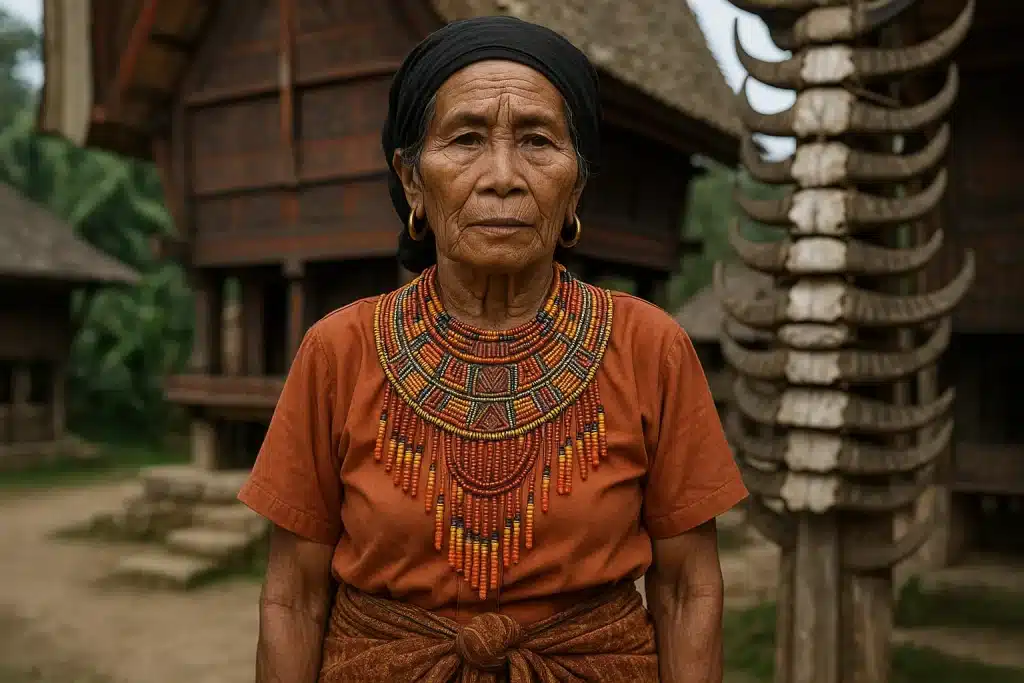
The ancestors of this seafaring people settled around 1500 BC in the Lake Tempe region, where they organised their daily lives around agriculture and fishing, creating stilt villages—still visible today.
Forcibly converted to Islam in the 17th century by the kingdom of Gowa, the Bugis nevertheless retained rites from their original religion. These traditional practices are found in La Galigo, a sacred odyssey written in Old Bugis, predating the Mahābhārata or the Rāmāyana. This colossal epic—more than 300,000 verses, around 6,000 pages—begins at the origins of humanity and continues to inspire the various Bugis ethnic groups, both Muslim and faithful to ancient precepts.
Only around a hundred people still understand the original language of La Galigo, for which no complete version exists anymore. Transmission therefore takes place mainly orally. An incomplete version dating from 1847 is kept at Leiden University Library (Netherlands), and other manuscripts are held in Jakarta.
Among the legacies of La Galigo are royal rites performed exclusively by the Bissu, sacred figures regarded as intermediaries between gods and humans. Neither men nor women, they embody the union of the five genders recognised in Bugis culture: female, male, gynandrous, hermaphrodite and androgynous.
Even after converting to Islam, many Bugis continue to venerate Sangiang Serri, also known as Dewi Sri, the rice goddess also present in Balinese Hinduism.
The Toraja – Another emblematic people
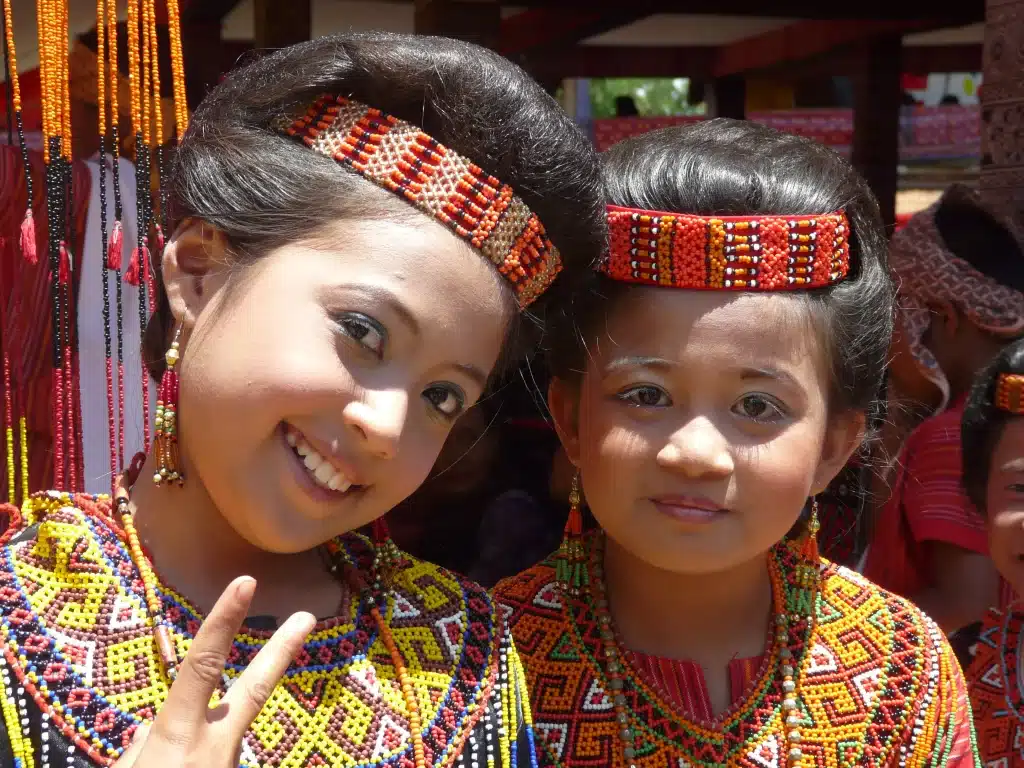
The Toraja, another major ethnic group, owe their name to the Bugis word To ri ya, meaning “people from above”. They play a central role in Sulawesi’s history.
After the defeat of the kingdom of Gowa against the Dutch in 1669, the Dutch—through the VOC—became the dominant force in the south of the island.
Towards the end of the 19th century, they turned their attention to the kaputaten of Tana Toraja, a region that was still not Islamised and was seen as favourable to evangelisation.
Poorly received, this Christian mission nevertheless led to the abolition of slavery, which was highly valued by the local elite. Dutch influence was limited, but today, one Toraja in two is Christian; the others are Muslim or practise aluk to dolo (“the way of the ancestors”), a syncretic religion combining animist traditions and Western elements.
A culture of the living… and the dead
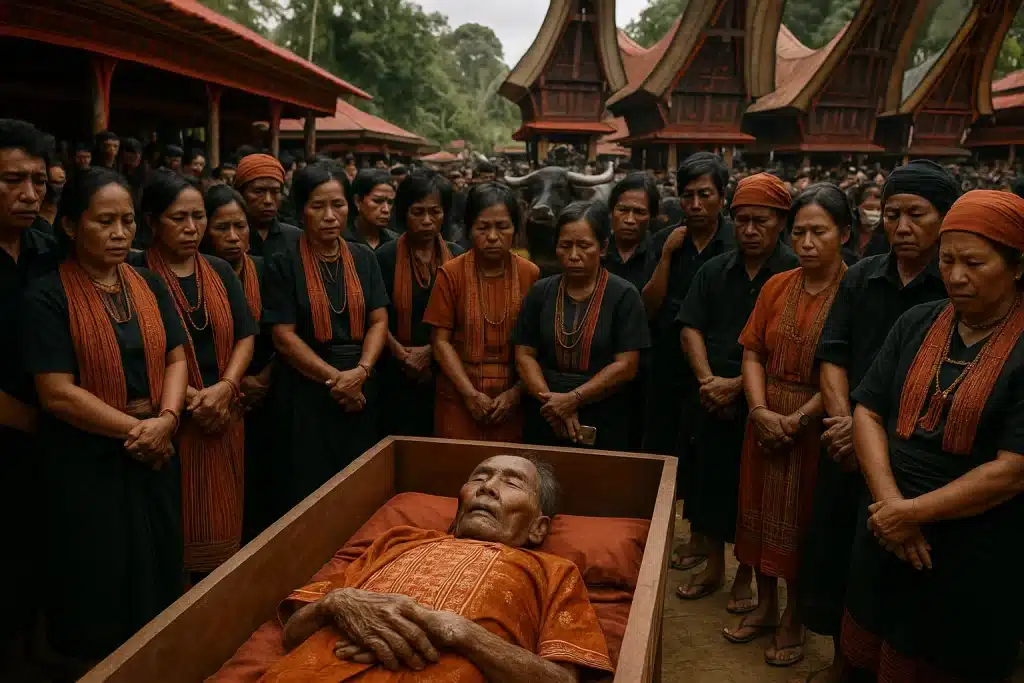
Among the Toraja, the relationship with death is essential and runs through all spheres of society. Funeral rites occupy a central place.
Tombs are carved into cliffs, where balconies house tau-tau, statues representing the deceased. In this way, the dead “see” the living, and the living can pay them tribute. Each vault, closed with a secret locking system, can contain several bodies, and the balconies sometimes display more than a dozen tau-tau.
Funerals can last for years: the body is then mummified or kept until the funds are raised. These ceremonies sometimes bring together thousands of people from all over Indonesia.
Water buffalo are sacrificed, a sign of prestige and respect, to accompany souls to the afterlife. The first buffalo is always slaughtered to the west of the house. These gestures, misunderstood by foreigners, strengthen community ties and pass on the values of respect and transmission. During Ma’Nene, the deceased’s body is even displayed, dressed in new clothes, to be honoured publicly before departing for Puya, the Toraja “paradise”.
The death of babies – Back to nature
When a newborn dies, some Toraja ethnic groups swaddle the baby in cloth, place it in a wooden box, then in the hollow of a sacred tree. A single tree can hold more than 12 babies. These trees become powerful symbols for the whole community: the baby returns to nature, rejoining the universe.
Tongkonan houses – The soul of Toraja families
Tongkonan, traditional Toraja houses, are also witnesses to this singular culture. Intended for noble families, they stand in contrast to banuan, more modest houses.
Their boat-shaped roof, their façade adorned with buffalo horns—symbols of strength and divine protection—and their tripartite spatial organisation (roof = sky, living space = human world, foundations = underworld) reflect a cosmic vision of the world.

In the village of Kete Kesu, you can still see tongkonan lined up along a central alley, facing rice barns—miniature replicas of the houses—that embody continuity between generations.
Would you like to discover Sulawesi? Contact us and we will create a true adventure together.