 Skip to content



Let’s be honest: if you come here to “do Bali” in 5 days—one temple at a run, two beaches, three Instagram spots and a timed sunset—you will leave with photos… and very little of Bali.
Because the island is not an amusement park.
It is a living place, with its balances, its rules, its rhythms, its communities and a spirituality that does not pause just because you are on holiday.
For many travellers preparing a trip to Indonesia with a specialist agency (and more specifically to Bali), the real change is not about seeing more places, but about changing the way you travel.
“Travelling differently” is not about going to secret places—there are not many left.
It is mainly about changing your mindset:
- stop fast consumption
- adopt a more respectful approach
- slow down
- seek greater consistency
And that is a good thing: the Balinese authorities are clearly pushing in this direction.
The Governor of Bali published a Code of Conduct for foreign tourists, Circular No. 07/2025, which focuses in particular on:
- respect for temples and sacred symbols
- appropriate dress
- payment of the tourist tax
- using licensed guides
- exchanging money at authorised money changers
- the ban on littering or using single-use plastics
In other words, travelling differently is no longer just a marketing stance.
It has become a cultural and practical necessity.
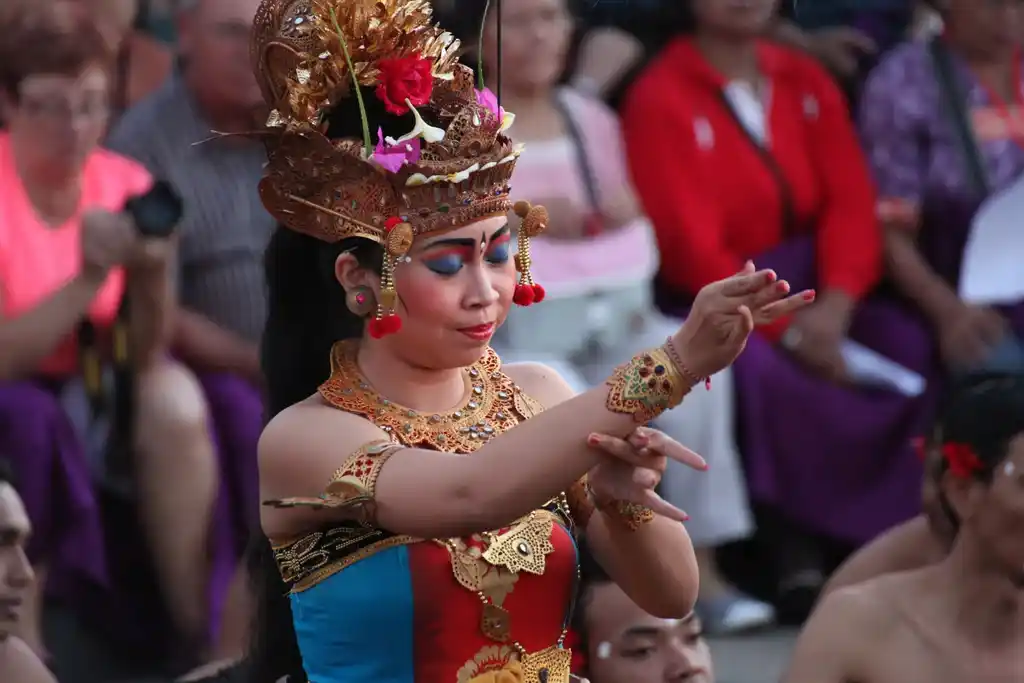
Cliché #1: reducing Bali to a simple postcard during a holiday in Bali
The most common cliché is to reduce the island to its images:
- perfect rice fields
- photogenic temples
- beach clubs
- villas
But rice fields are not a backdrop. And temples are not museums.
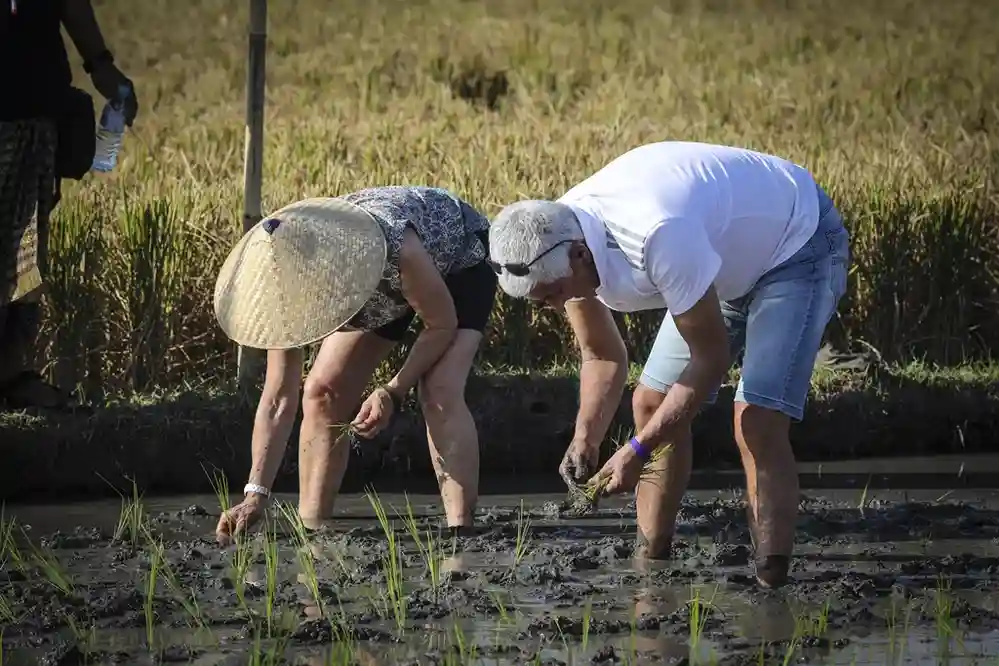
A very concrete example: the subak system—irrigation and agricultural organisation—is listed as a World Heritage site.
UNESCO explains that this cultural landscape covers 19,500 hectares and that the water temples are the heart of a cooperative water management system dating back to the 9th century.
UNESCO also states that the subak expresses the philosophy of Tri Hita Karana:
- harmony between the spiritual world
- the human world
- nature
So travelling differently already starts with this:
Seeing a rice field as a living system—social, spiritual and ecological.
Not as a wallpaper.
Cliché #2: “We’re doing Ubud and that’s it”
Many travellers follow a very classic pattern:
- a culture base, often Ubud
- a seaside base
- possibly a nearby island such as Nusa Penida
It is not necessarily bad, but it is often experienced as accumulation.
Moving beyond tourist clichés in Bali also means accepting a simple idea:
- fewer stops
- more depth
A full day in a valley, walking slowly between the fields, often brings more than three temples visited in two hours.
A village seen at the right pace, in the morning, with the preparation of offerings and local life, often leaves a stronger impression than an overcrowded spot at midday.
And above all, Bali is not a uniform island.
If you only see the south coast around Denpasar, Canggu or Seminyak, you are only seeing a very particular fragment of the island.
For travellers who want to travel to Bali differently, the real change often lies in widening the frame.
A golden rule: here, respect is not optional
We say this clearly because it matters.
In Bali, many places cannot be visited “just like that”.
They are sacred places, with rules.
The Governor’s Circular 07/2025 explicitly asks:
- to respect the sanctity of temples and sacred objects
- to dress modestly and appropriately
- to behave respectfully in public places
- not to climb on sacred structures
- not to take inappropriate photos
- not to litter
One point sometimes surprises some visitors:
The text prohibits access to the most sacred areas for people who are menstruating.
Whether one agrees or not culturally, the fact remains simple:
These are the local rules.
And travelling differently also means respecting them.
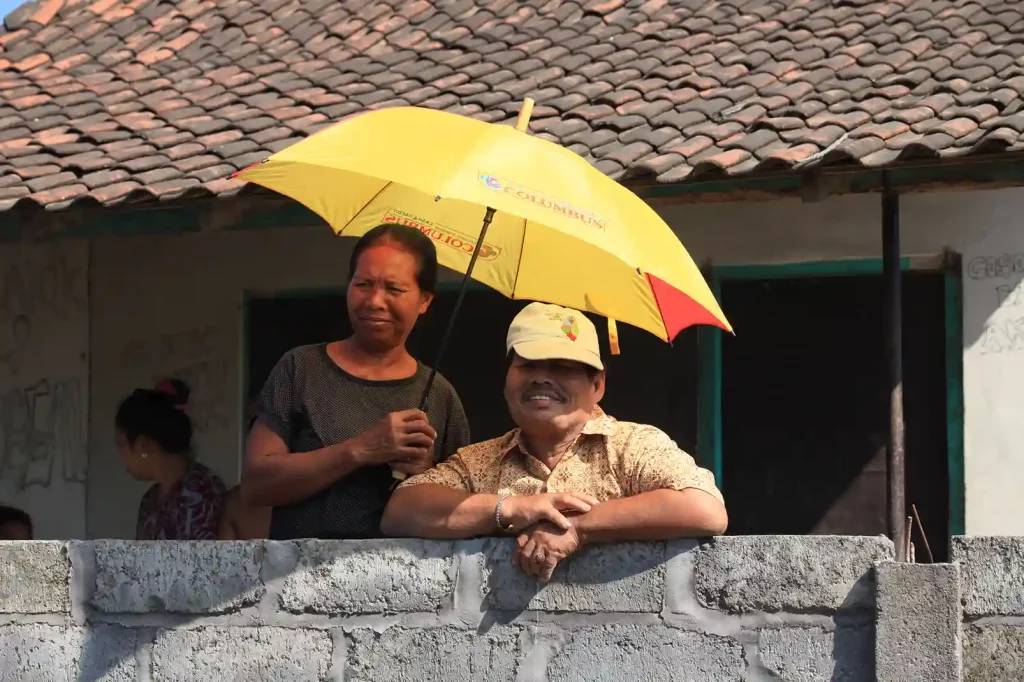
Travelling differently in Bali also means travelling cleaner (especially when travelling with friends)
Still in Circular 07/2025, foreign tourists are explicitly prohibited from using certain single-use plastics:
- plastic bags
- polystyrene
- straws
- disposable containers
In practical terms, to travel cleaner:
- use a reusable water bottle
- choose reusable bags
- avoid disposable kits
- choose accommodation that limits plastic
This is not activism.
It is simply consistent with the reality of an island that has to manage its waste.
On a Bali itinerary with friends, these habits also help pass on another way of travelling.
Moving beyond clichés also means changing geography to discover Bali
If you are looking for a more natural and quieter Bali, there are several solid options.
Taman Nasional Bali Barat: the wild west
The official Indonesia Travel website describes this park as a major natural area made up of:
- forests
- mangroves
- a marine reserve including Pulau Menjangan
This kind of place naturally requires you to travel differently:
- register with the park offices
- arrange guides
- respect protected areas
- slow the pace
It reconnects you with long time and nature.
Jatiluwih Rice Terraces: understanding what you are looking at
Yes, Jatiluwih is well known.
But the difference between a cliché and an experience depends above all on how you live it.
If you come only for the photo, it remains a cliché.
If you seek to understand:
- the subak
- the water temples
- the agricultural cycles
- community organisation
… then you enter another dimension of travel!
And you are aligning precisely with what UNESCO describes:
‘A structured relationship between agriculture, water, rituals and community.‘
Travelling differently in Bali also means travelling more fairly
1) The foreign tourist tax
The official Love Bali website indicates an amount of:
- IDR 150,000 per person
- paid only once during the trip
The platform also reminds visitors that this measure has been in force since February 14, 2024.
2) Exchanging and paying properly during a trip to Bali
Circular 07/2025 asks:
- to exchange money only at licensed money changers
- to use the Indonesian rupiah
- to favour authorised establishments
Why mention this here?
Because travelling differently also means avoiding grey areas and irresponsible tourist practices.
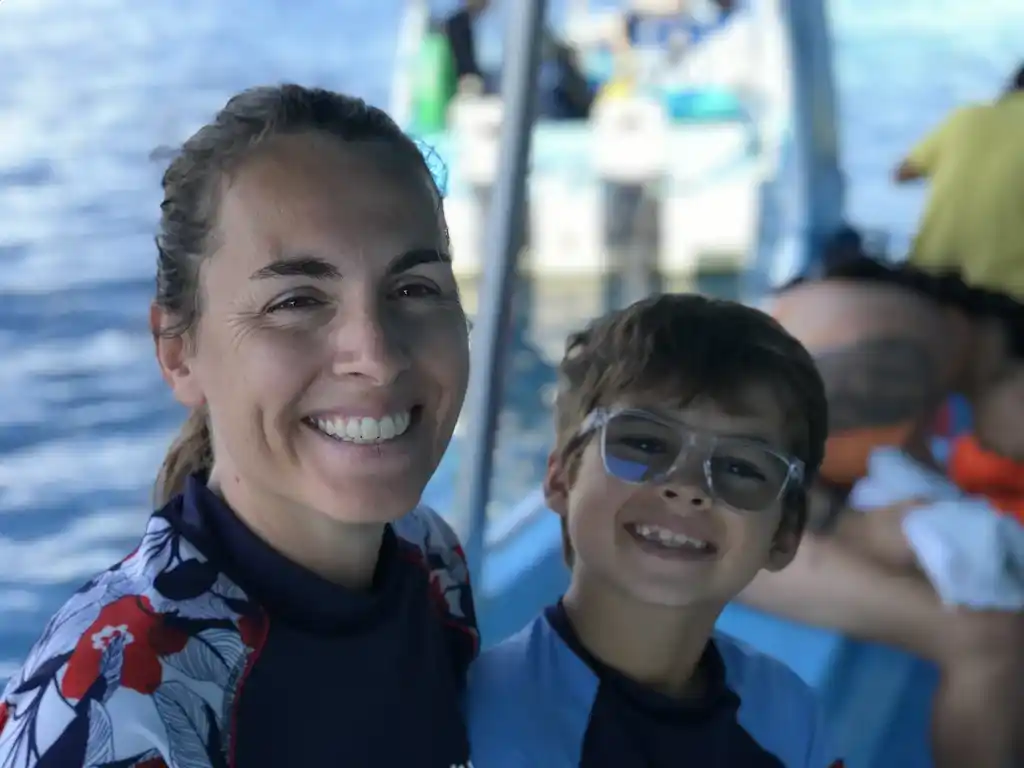
The real change: moving from the spot to the relationship during a trip to Bali
Moving beyond clichés is not only about changing places.
Above all, it transforms the nature of your experience.
- meet rather than consume
- observe before acting
- respect sacred areas
- take your time
The circular also explicitly recommends using licensed local guides for certain visits.
It is often at that moment that you truly begin to feel Bali:
- the gestures
- the rhythms
- the details
- everyday life
And not only the landscapes.
A simple method to travel differently before leaving for Bali
We suggest a simple framework.
1) Choose one main intention
- nature
- living culture
- diving
- rice fields and mountains
- family trip
If you do not choose, you stack.
2) Build the itinerary according to the logic of the terrain
Bali means:
- relief
- traffic
- ceremonies
- driving time
Too many stops often create fatigue and frustration.
3) Create anchoring days
A day with no boxes to tick.
You walk.
You observe.
You live.
And these are often the moments travellers remember most.
4) Add a structuring experience
- a national park
- a UNESCO landscape
- a ritual moment experienced while respecting the rules
This gives the trip a much stronger backbone.
Travelling differently in Bali is not more complicated
Travelling differently in Bali is not about avoiding all well-known places.
It is mainly about:
- understanding that the island is alive
- respecting the rules and local culture
- moving beyond the checklist reflex
- bringing meaning back into the stops
For travellers who go through a local travel agency in Bali, building a more coherent, smoother and more respectful itinerary often makes it possible to enjoy a much deeper experience of the island.