 Skip to content



Why every gong, every bell, and every resonance is a prayer in motion
Visitors freshly arrived to discover Bali hear the gamelan even before they see it: approaching a temple, a metallic breath rises then recedes like a wave, punctuated by gong strokes that seem to mark the universe’s breathing. It is not a mere orchestra; it is a sacred body whose every organ is built, tuned, and blessed to dialogue with the invisible world. Exploring the secrets of gamelan means entering the sonic language that connects humans to gods and ancestors, an experience often revealed to travelers accompanied by a travel agency in Bali attentive to living traditions.
Discovering gamelan: an ensemble conceived as a living entity
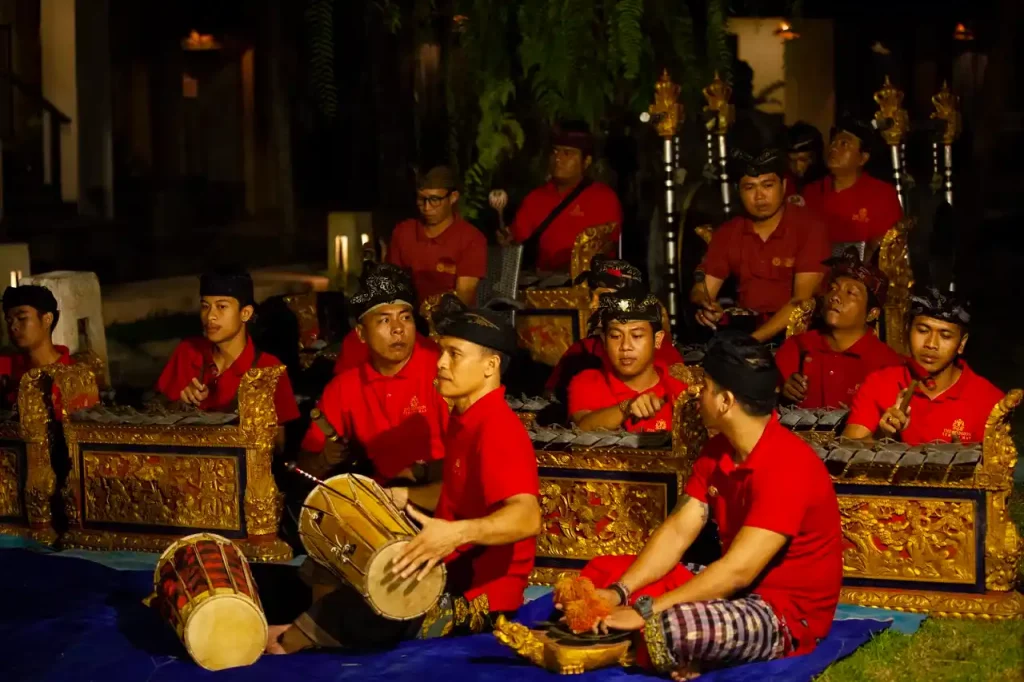
In Bali, one does not speak of a gamelan, but of a set (sambah): each instrument is forged and tuned with all the others during the same bronze casting. Changing a single blade breaks the balance.
Balinese people say that a gamelan possesses a soul (taksu), comparable to that of a temple; it is awakened by offerings, appeased before transport, and thanked after a ritual. Understanding this requires time and guided insight, such as can be offered by a local travel agency in Bali specializing in cultural discovery.
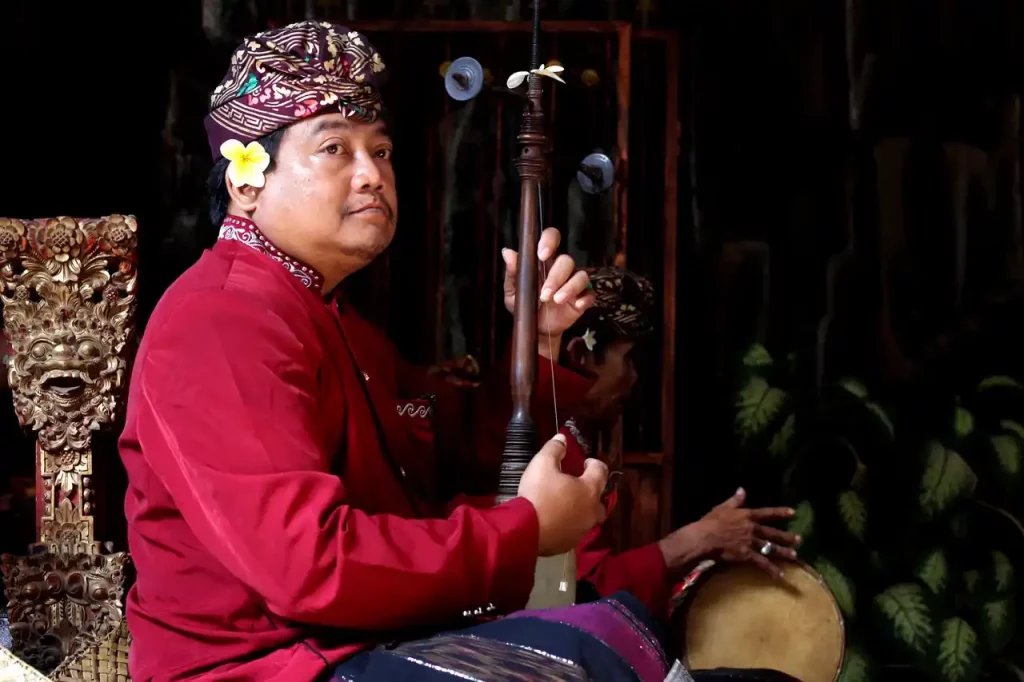
The gamelan instruments that will sing to your ear during your stay in Bali
Gangsa (suspended keyed metallophones)
Their crystalline timbre, produced by hardwood mallets, traces the melodic skeleton. Two rows – male (pengisep) and female (pengumbang) – are deliberately detuned by a few cents.
This slight beat, called ombak, symbolizes the union of polarities: sky and earth, masculine and feminine, order and chaos.
Reyong (row of small horizontal gongs)
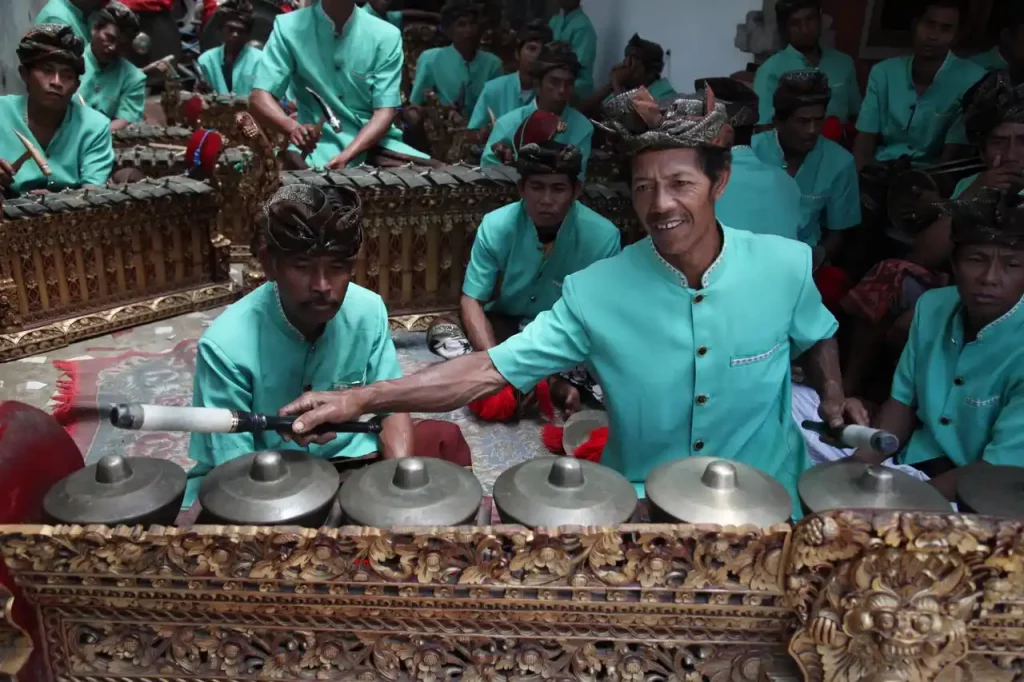
Four musicians share sixteen bronze bowls, crossing their arms at high speed. Their counterpoint evokes the sung poetry kekawin and illustrates the profusion of creation during rituals.
Kendang (drums)
Always played in grave and acute pairs, they lead the ensemble. The kendang lanang embodies dynamic masculine energy, the kendang wadon feminine receptivity.
Ceng-ceng (mounted cymbals)
Their brilliance punctuates each musical phrase ending. During funeral ceremonies, these high-pitched sounds are believed to ward off malevolent spirits.
Gong Ageng and Gong Lanang
Their rare strikes recall the rotation of the planets. Before being suspended, the gong receives a ritual anointing intended to open its central ‘eye’.
Suling (bamboo flute)
It soars above the metal and embodies the breath of the wind, especially during ceremonies related to water and rain.
Holidays in Bali: understanding the tuning and cosmology related to Gamelan
Two scales coexist: the seven-note pélog and the five-note sléndro. Mountain temples often prefer the ‘older’ sléndro, used to invoke ancestors. Coastal villages adopt the pélog, considered more joyful, suitable for celebrating fertility. Thus, the place where a gamelan is heard already reveals the intention of the rite: mourning, harvest, royal celebration, or exorcism.
Every Balinese ritual (see our article on ‘Everything goes by threes’) is based on three spheres:
- Niskala – the invisible, prayers
- Sekala – the visible, offerings and processions
- Sabda – sound, the link between the two
The gamelan occupies the sonic sphere in the ceremonial triad and brings the entire ritual to life.
Balinese women and men: who plays the Gamelan?
Historically, only men handled bronze because it was associated with martial energy. Since the 1980s, female ensembles (Gamelan Sekar Jepun from Denpasar) have formed; they often play during rites related to Dewi Sri, the rice goddess. The contrast between delicate hands and wooden hammers fascinates visitors: tradition, far from being static, adapts to the present.
Gamelan and dance: a coded dialogue that travelers should know to appreciate their Bali vacation
The kendang player follows each breath of the dancer; the dancer, in turn, responds with a blink of an eye or a flutter of a fan. This language is called tandang: it ensures the fusion of music and gesture. In a topeng (masked dance), an abrupt reyong strike announces the entry of a new mask; in a Barong procession, the gong ageng signals when the mythical creature should bless the crowd.
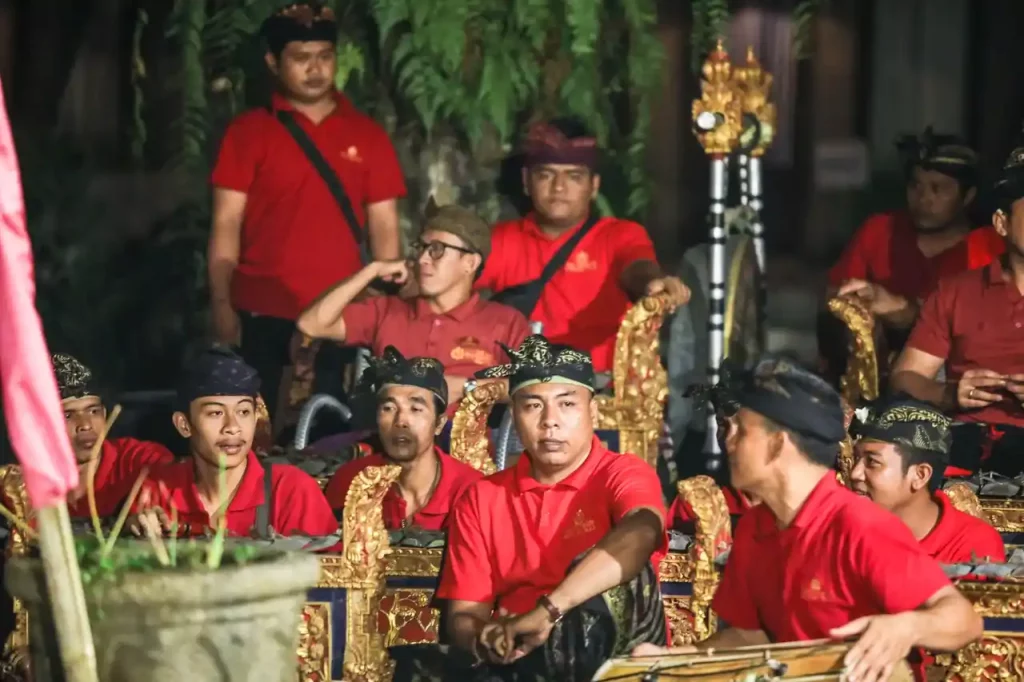
Life of a Balinese gamelan: birth, rest, rebirth
The bronze casting takes place on a favorable constellation day, decided by an astrologer priest. After several decades, when the blades crack, the village puts the instrument ‘to sleep’: it is wrapped in yellow cloth and kept in an attic. Sometimes, it is reborn in a new form, recast for a kebyar set. No piece of sacred metal leaves the cycle; the material transmutes, like souls during reincarnation.
Discover Bali and attend (or participate in) Gamelan: a guide for travelers
- Listen: prioritize rehearsals in banjar in the late afternoon; access is free, a smile is enough.
- Respect: remove your shoes, do not sit higher than the gong.
- Participate: ask for permission; you will often be given a pair of ceng-ceng to follow the accents. Even without musical theory, three minutes are enough to feel the vibration that passes through your palms to your plexus.
This is an immersive, powerful experience that will earn the admiration of your loved ones during your family trip to Bali or with friends.
An art that travels beyond Bali
Balinese ensembles have spread to over thirty countries. Yet, masters systematically return to bless the metal; they carry a few grains of rice, a pinch of temple ash, and sprinkle the gong with tirtha (sacred water) before the first concert outside Indonesia. Californian or Lyonnaise gamelan, the ritual is the same: a reminder that bronze carries the memory of the island and diffuses it like sonic pollen.
Approaching Balinese gamelan means understanding that sound can become an offering. Each note suspends time and connects the visible and invisible. From the rumble of the gong ageng to the shimmer of the reyong, the music re-enacts the creation of the world and appeases ancestors.
Next time you feel the ground vibrate under a kendang strike, close your eyes: you might hear the echo of an ancient prayer, still alive.