 Skip to content



A nature and ethical itinerary to encounter the rarest bird on the Island of the Gods
Why the Bali Starling deserves your attention during your Bali vacation
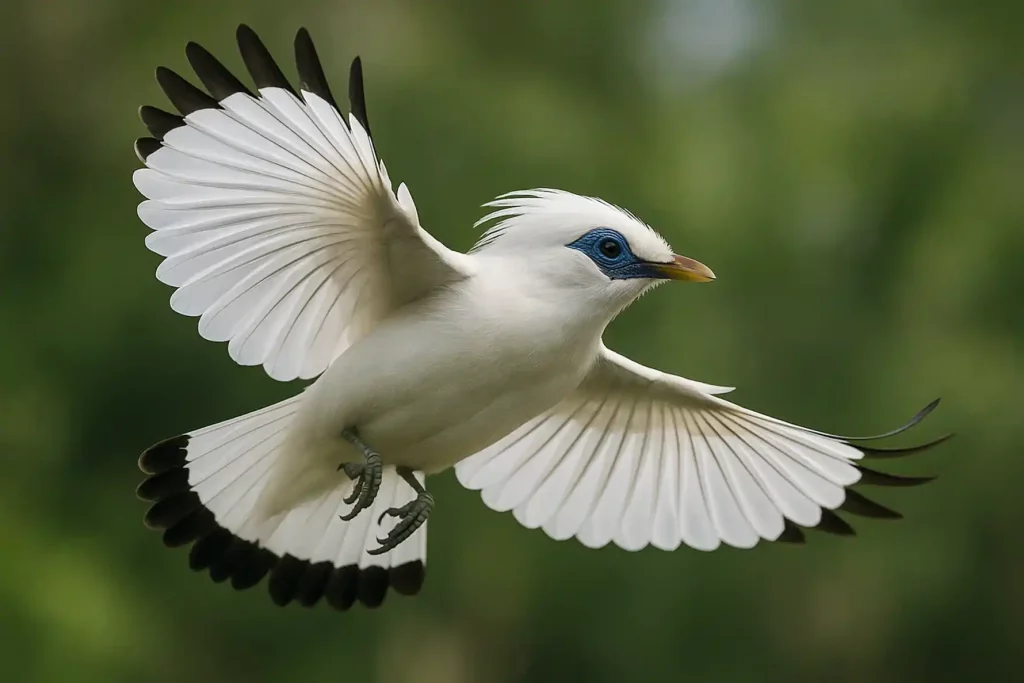
Snow-white plumage punctuated by an electric blue mask, keen eyes protected by a crown of bristly feathers: the Bali Starling (Leucopsar rothschildi), or jalak Bali in Indonesian, is one of the most elegant birds in the world — and also one of the most endangered.
At the turn of the 2000s, biologists counted only about ten in the wild, all confined to the western peninsula of the island. Poaching for the cage bird trade, habitat loss, and slow reproduction almost wiped the species off the map.
If you plan a trip to Bali for a nature-focused journey or are looking for unique stops for an off-the-beaten-path Bali tour, dedicating a day (or even two) to discovering Bali Starling conservation programs guarantees a rare experience. A travel agency committed to responsible tourism in Bali will know how to integrate this type of experience into a balanced itinerary. In any case, that’s what we strive to do…
You will support a local initiative, see a bird found nowhere else, and bring back an inspiring story for your loved ones.
When Bali Saves the Bali Starling: A Brief History of Conservation Efforts
- 1912: Discovered and scientifically described by British ornithologist Walter Rothschild.
- 1980: Creation of the Bali Barat National Park (BBNP) covering 19,000 ha, including the last nesting area.
- 1990–2000: Black market explosion; a starling sells for up to $1,000 to collectors in Asia.
- 2005: Launch of a breeding-release plan in a semi-open aviary in the BBNP.
- 2011: Involvement of Nusa Penida communities, southeast of Bali; the “Friends of the National Parks Foundation” (FNPF) program releases 100 captive-bred birds.
- 2020–2024: Stabilization of the wild population; estimates hover around 300 free individuals, but vigilance remains essential.
Three sites to visit during your Bali vacation to understand and support reintroduction efforts
1. Bali Barat National Park
This is the historical heart of the species’ protection. Forest rangers patrol day and night; since 2017, the park offers a two-hour “Starling Trek” at sunrise. Your chances of observation are real: at the edge of the mangroves, the starlings noisily forage for insects.
2. Nusa Penida Bird Sanctuary
The FNPF association convinced 40 villages to establish a “no-take zone” for all caged birds. Result: released starlings now nest freely there. Locals build bamboo nest boxes and provide 24/7 surveillance.
3. Bali Bird Park (Gianyar)
Although commercial, the park plays a buffer breeding role: each year, a portion of the chicks is destined for release programs. Educational panels (English/French) explain the process from incubator to acclimatization aviaries.
- Advantage: easy to integrate into a day trip from Ubud to Goa Gajah.
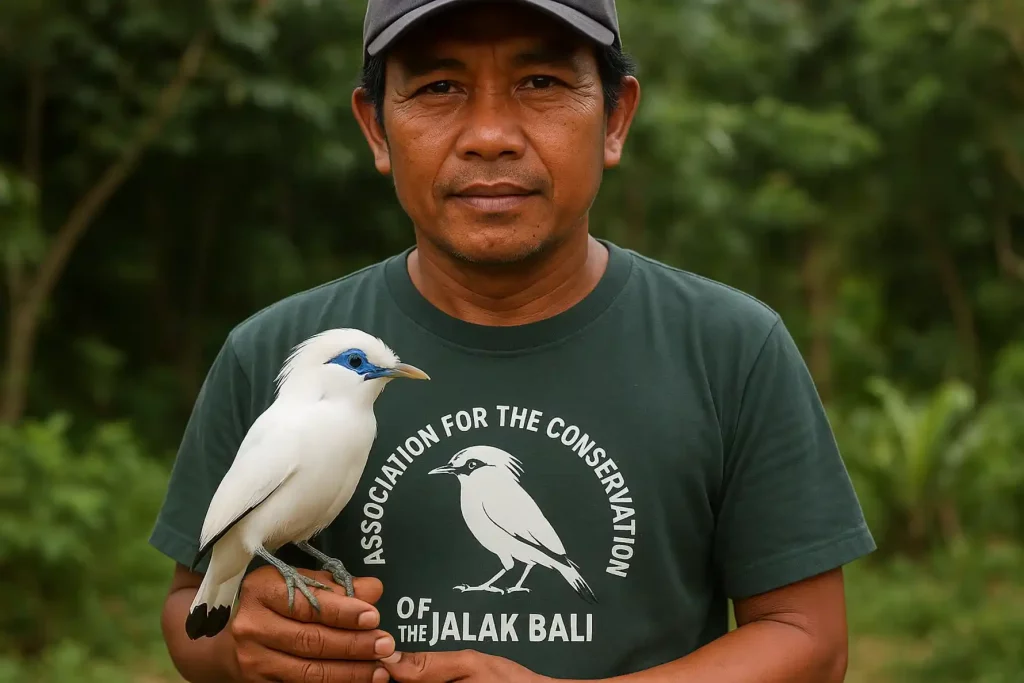
- To do: “Backstage Pass” session (additional cost) to feed adult starlings and photograph an individual on a keeper’s arm. Again, a Bali travel agency aware of environmental issues can facilitate access to these initiatives.
The Process of a Bali Starling Reintroduction Program
- Genetic selection in partner zoos (Singapore, Jakarta, Surabaya) to maintain minimal diversity.
- Aviary breeding: chicks are raised by their parents (not by hand) to preserve wild behavior.
- Acclimatization: in the soft-release aviaries in Bali Barat or Nusa Penida, the birds practice flying and recognize natural food slipped into feeders (beetle larvae, local fruits).
- Gradual release: the door opens, but feeders remain stocked for a month to prevent starvation.
- Monitoring: each individual wears a colored ring; volunteers observe survival and reproduction. The success rate approaches 60%, an encouraging figure for a passerine once doomed.
Why see and support the Bali Starling during a stay in Bali
This cause illustrates Balinese identity because the Bali Starling is more than a bird; it functions as a mirror of island society. Its disappearance would have tarnished the image of an island supposed to live in harmony with nature, according to the principle of Tri Hita Karana (balance between gods, humans, and the environment). By choosing to protect the starling, the Balinese reaffirm this philosophy: human well-being comes from respecting living things. For the traveler, joining this dynamic transforms a simple photo safari into an act of responsible travel.
Observe, understand, preserve: another way to travel in Bali
Visiting the Bali Starling sanctuaries is not an ornithological interlude reserved for enthusiasts only; it is an opportunity to take concrete action, meet committed communities, and bring back a story of hope.
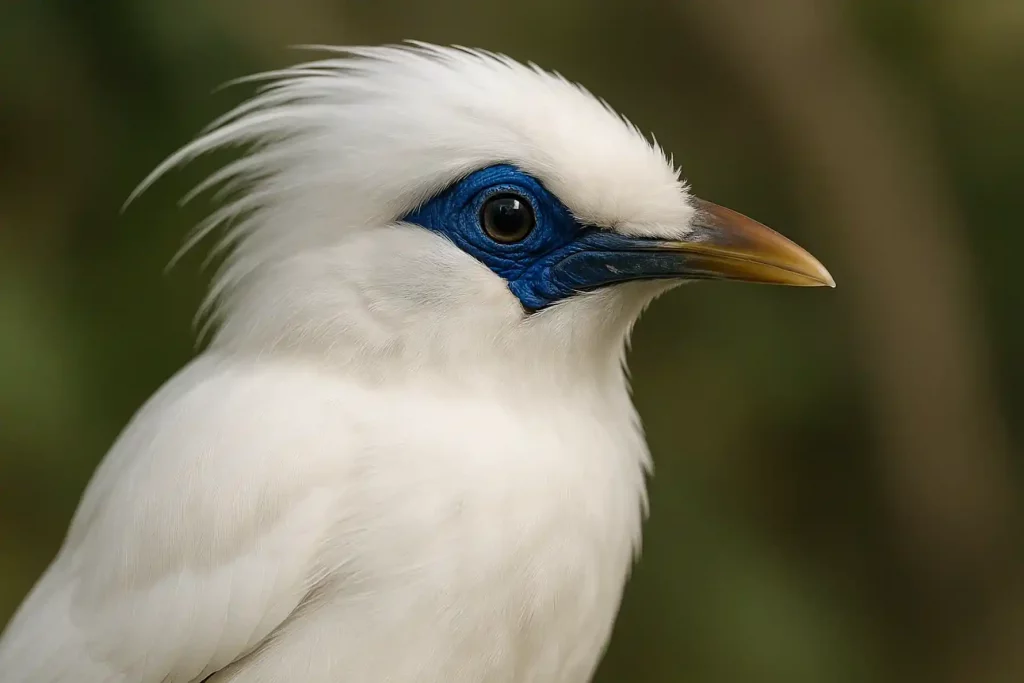
During your stay in Bali, taking the time to observe this immaculate bird in the low light of a Nusa Penida morning, or to hear it pierce the silence of the Bali Barat mangrove, gives new depth to the expression “Island of the Gods.” And when you return, you can say that you contributed, even if only with a nest box or a donation, to keeping the white and blue flash of the starling, a fragile but brilliant symbol of local biodiversity, in the Balinese sky.
So, if your next step is to travel to Bali for the beach or yoga, save a day for the Bali Starling: it may be where your strongest relationship with the island begins. Selamat jalan!