 Skip to content



Two calendars, two logics, one daily life
1) The Pawukon, an essential calendar for discovering Bali differently
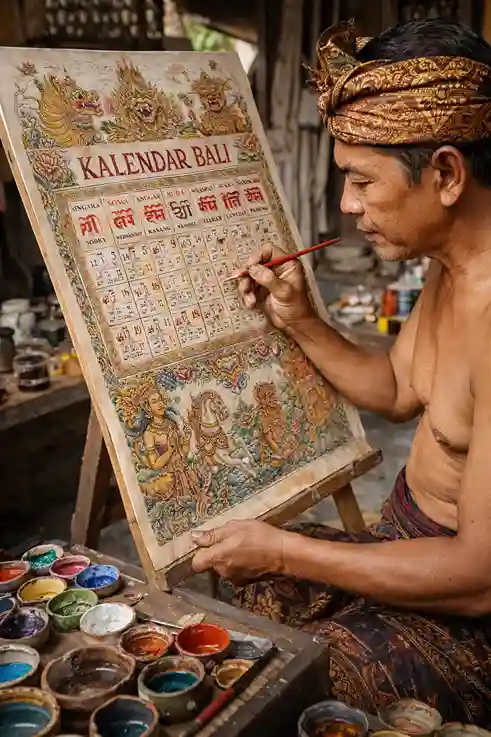
The Pawukon is a ritual calendar that runs on a 210-day cycle, made up of 30 “wuku” (7-day weeks).
But where it becomes truly Balinese is that, in addition to this 7-day week, the Pawukon overlays several “weeks” at the same time—cycles of 1, 2, 3… up to 10 days—called wewaran. As a result, each day “carries” several identities at once.
In practical terms, this is the calendar that sets a large share of ceremony days, auspicious days, and above all recurring events such as temple anniversaries, called odalan.
For travellers who want to discover Bali, understanding this calendar helps you better grasp the island’s spiritual rhythm.
2) The Saka, the lunar calendar and the Balinese year
In parallel, there is the Saka, or Çaka, calendar, a lunisolar system with lunar months called sasih. It is used in particular to place the major dates linked to the lunar cycle and the Balinese New Year, Nyepi.
An important and verified point: Nyepi falls at the time of the Saka New Year, and in Balinese tradition it is linked to the new moon of Sasih Kesanga (end of the year), then the beginning of Sasih Kadasa (start of the year).
What this changes for you: rites at every timescale.
What this changes for you: rites at every timescale
To understand “the rhythm”, you have to think of it this way: in Bali, there are monthly, twice-monthly, every-35-day, every-210-day, and annual markers.
The lunar rhythm: Purnama and Tilem during your holiday in Bali
The full moon, Purnama, and the new moon, Tilem, are major markers—times when many Balinese people go to pray, make offerings, and when temples are more active.
Even if practices vary from village to village and from temple to temple, the idea is stable: the phases of the moon structure a regular part of ritual life.
During a holiday in Bali, these periods are felt especially strongly in temples and villages.
Every 15 days: Kajeng Kliwon, a “sensitive day”
A very well-known marker, even among non-specialists, Kajeng Kliwon comes around every 15 days. It corresponds to the meeting of Kajeng in the 3-day cycle and Kliwon in the 5-day cycle within the Pawukon.
In everyday life, you often see it in an increase in small “protective” offerings and special attention paid to certain spaces. Again, not because it is “exotic”, but because it is a coded day.
Every 35 days: Tumpek days during a stay in Bali
Another very tangible rhythm: Tumpek days, which return every 35 days, always on a Saturday Kliwon.
There are several Tumpek, each associated with a domain:
- metal and objects
- plants
- animals
- arts
A concrete example: Tumpek Uduh, or Tumpek Wariga, dedicated to plants and nature, celebrated on Saniscara Kliwon Wariga in the Pawukon cycle.
During a family stay in Bali or a trip to Bali with friends, these ceremonies let you see another side of local culture.
Every 210 days: the major “periods” that transform the island during a trip to Bali
Odalan, the temples’ anniversary
A Balinese temple does not have “an annual celebration” in the Western sense. Many celebrate their ritual anniversary according to the Pawukon; an odalan returns with each 210-day cycle.
As there are thousands of temples, from the small family shrine to the village temple, this explains a simple fact: there is almost always an odalan somewhere.
When travelling, this translates into:
- beautifully decorated temples on certain days,
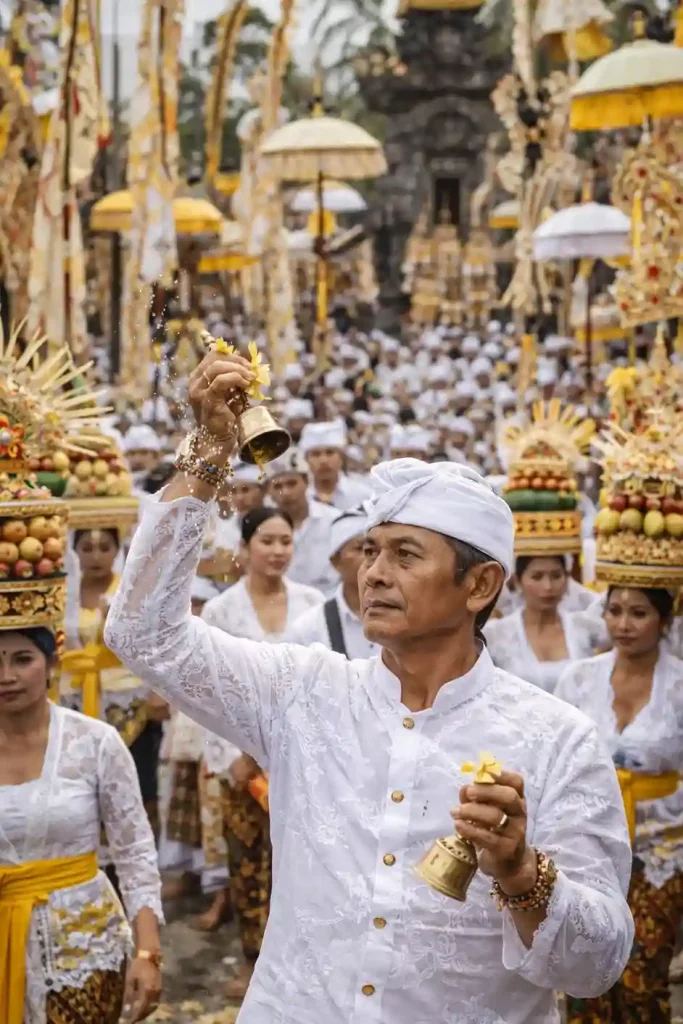
- local processions,
- areas that are sometimes less accessible,
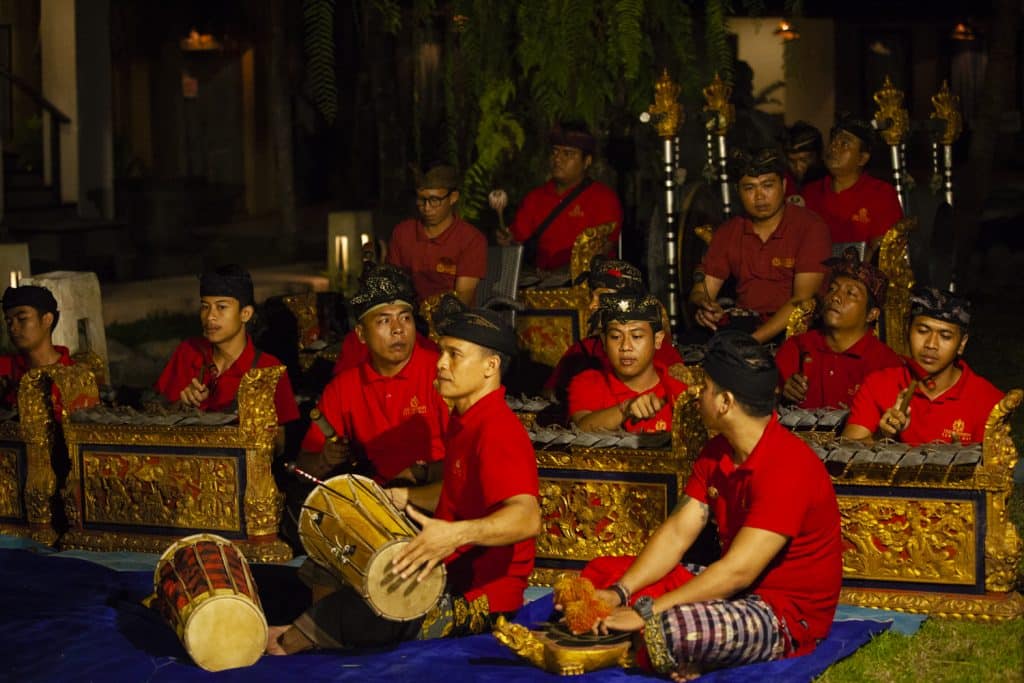
- a denser atmosphere, with more prayers and ritual music.
Saraswati and Pagerwesi: knowledge and protection
Two important festivals, highly structuring and easy to place:
- Saraswati, observed every 210 days, falls on Saniscara (Saturday), Umanis, Wuku Watugunung
- Pagerwesi, observed every 210 days, falls on Budha (Wednesday), Kliwon, Wuku Sinta
What to remember: even if you do not master the names, you can recognise these periods by the activity in the temples, the more numerous offerings, and a very collective atmosphere.
Galungan and Kuningan, the major festivals you discover on a trip to Bali
Galungan and Kuningan are probably the most visible festivals for travellers, because the island is covered with penjor—tall decorated bamboo poles—and the atmosphere changes for several days.
Key facts:
- Galungan falls on Buda Kliwon, Wuku Dungulan, and returns every 210 days
- Kuningan comes 10 days later, on Saniscara Kliwon, Wuku Kuningan
According to Balinese sources and accessible cultural explanations, this cycle is linked to a central idea: the victory of dharma over adharma and the importance of the bond with ancestors.
As the Pawukon is shorter than the Gregorian year, these festivals “shift” on our calendar and can appear twice in the same calendar year.
Nyepi, the day Bali comes to a complete stop
Nyepi is not “a quiet day”. It is an extremely regulated collective shutdown, linked to the Saka New Year.
The rules: Catur Brata Penyepian
Nyepi day is governed by the Catur Brata Penyepian, often summarised in four prohibitions:
- Amati Geni: no fire or light
- Amati Karya: no work
- Amati Lelungan: no travel
- Amati Lelanguan: no entertainment
Major logistical fact: the airport closes
This point must be taken seriously: the airport closes during Nyepi. I Gusti Ngurah Rai International Airport officially announces the suspension of operations for 24 hours, depending on the year.
What happens before: Melasti and purification rituals
Before Nyepi, there are preparatory rituals, including Melasti, a purification ceremony in which sacred objects are brought to the sea, or sometimes other sacred waters, to be purified in preparation for Nyepi.
The day before, you can also see ogoh-ogoh parades—large effigies visible all over the island.
Why the Balinese calendar transforms your travel experience
If you understand this, Bali immediately becomes easier to read.
- “Dates” are not enough
A day may be “just a Tuesday” for you, and be a very marked ritual day locally because several cycles intersect. - Festivals are not rare; they are structural
Odalan, Tumpek, Kajeng Kliwon, Purnama or Tilem are not exceptional events. They are the normal fabric of Balinese life. - The “real Bali” is not a list of spots; it is a rhythm
Many travellers miss Bali because they only see places. The calendar shows you the moments.
How to travel smart with the Balinese calendar before leaving for Bali
We recommend three simple, very practical habits:
- check the key dates—Nyepi, Galungan, Kuningan—if you have a tight schedule, because Nyepi can block travel and flights
- accept detours: a procession can slow down a road; it is not “a problem”, it is local life
- behave properly in temples—clothing, attitude, photos—because the calendar multiplies sacred moments
For travellers going through a travel agency in Bali, factoring the Balinese calendar into the itinerary often makes it possible to experience more authentic moments.