 Skip to content



Anatomy of a Balinese Home: Sacred Orientation, Pavilions, and Family Hierarchy. Key elements for a unique Bali experience
When you first enter a rumah tradisional, you feel as if you are stepping into a miniature village: several buildings, altars, a rice granary, and a central courtyard where everything happens. This arrangement adheres to precise rules that blend religion, cosmology, and social organization. Knowing these codes enriches any trip to Bali: you no longer see a simple courtyard, but a living map of a world governed by the balance between gods, ancestors, and humans, as often revealed by a Bali travel agency attentive to local cultural realities.
The Orientation of Balinese Homes: Positioning Between Sacred Mountain and Purifying Sea
The first key is called Kaja–Kelod. Kaja points towards the mountain (north or northeast depending on the village), the seat of the sacred; Kelod descends towards the sea, the realm of demons. In a Balinese home, one always sleeps, prays, or eats facing the mountain, never the opposite. The east-west axis (kangin–kauh) plays a secondary role: the east, the direction of the sunrise, is considered purer.
For travelers wishing to travel to Bali immersively, simply observe: the main door rarely opens towards the mountain side but rather towards the sea, so that one “ascends” towards the sacred upon entering. Instinctively, one feels a symbolic ascent that prepares for respect, a subtle interpretation often facilitated by a Bali travel agency specializing in immersive experiences.
The Divided Courtyard of Balinese Homes: The Sanga Mandala Principle
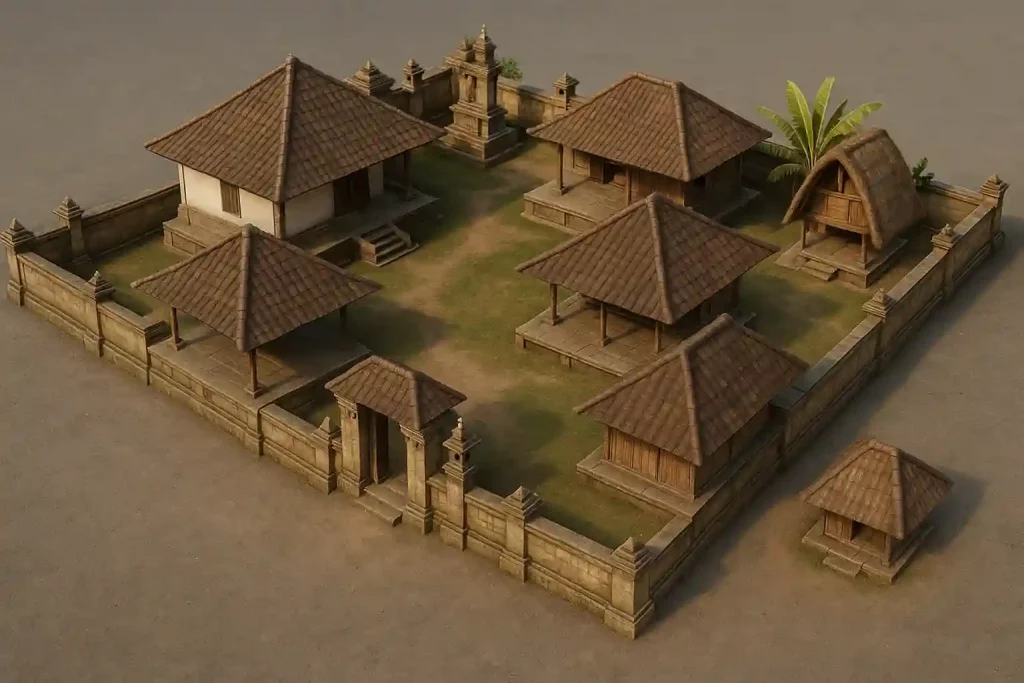
Once past the gate, a small wall called aling-aling forces the visitor (and, it is said, negative spirits) to turn before accessing the main courtyard. This courtyard is divided into nine hierarchical zones, from the purest (northeast) to the most profane (southwest). The pavilions are thus arranged according to their function and degree of sacredness.
Essential Pavilions and Their Daily Role
- Bale Daja / Bale Dangin (north, mountain side)
This is the house of ancestors and the honor chamber. Distinguished guests, newborns during purification rites, or the deceased before cremation are placed here. - Sanggah Kemulan (family altar, northeast)
This is the “courtyard temple.” Every morning, the mother (or eldest woman) places the canang sari here. For those on a family trip to Bali, it is touching to see children learn to prepare these offerings before going to school. - Bale Dauh (west)
Multifunctional pavilion: dining room, living room, younger brothers’ dormitory. Young boys chat late into the night, the television crackles, spice paste is ground. - Bale Gede / Bale Gajah (east)
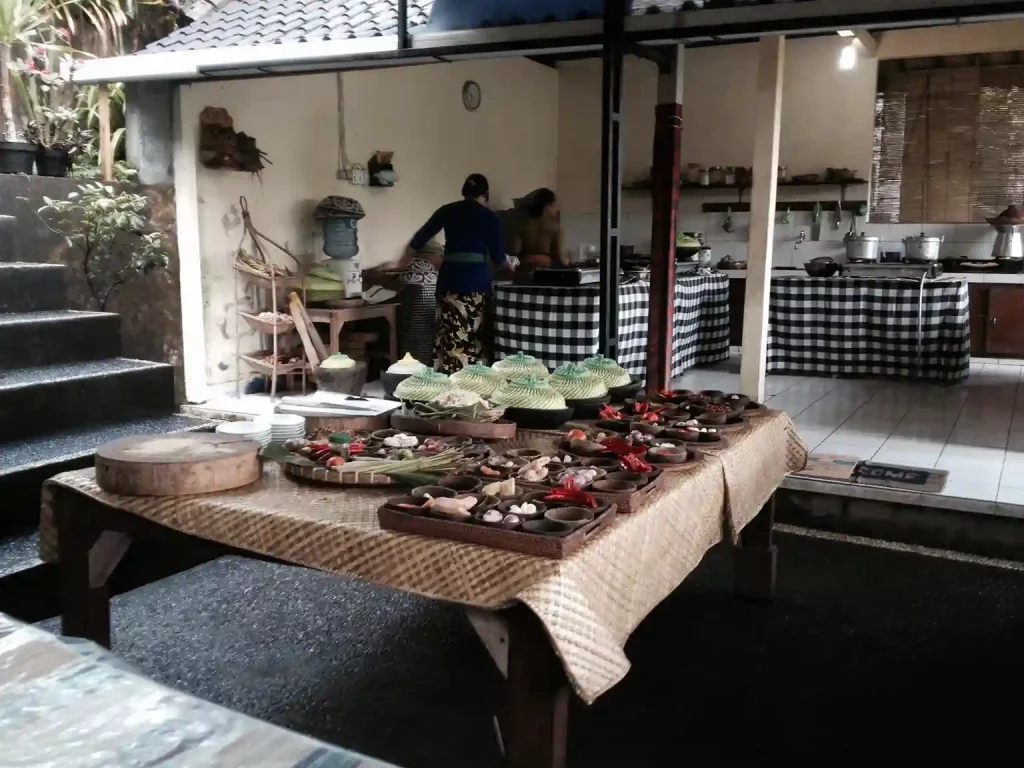
Ceremonial pavilion. Fruit pyramids for weddings are assembled here, and coconut leaves are woven before an odalan. - Paon (kitchen, south of the courtyard)
Considered profane but indispensable. The fire is lit before dawn; the aroma of Balinese coffee reminds every Bali tour visitor that the day starts very early. - Lumbung (rice granary, southwest)
On stilts. Rice, a gift from Dewi Sri, remains in the lower zone, as it is not sacred until cooked. - Kandang (pig or poultry enclosure)
Always to the south, where the impure meets the ground. - Each building rests on a base, emphasizing the separation between purity (above) and impurity (below). Walking barefoot means accepting this constant dialogue with the earth.
Family Hierarchy: The Place of Birth Order
The structure also respects generational order. The eldest (often called Wayan, as you may have read in our article ‘Discovering Bali and the Meaning of Balinese Names’) inherits the pavilion closest to the altar; the younger sibling (Made) will then take the Bale Dauh, and so on.
When a son marries, his parents sometimes add a small pavilion to the south, bordering the original domain: this is the “satellite house,” a sign that the family branches out without ever breaking from the main lineage. For travelers wishing to visit Bali and stay with locals, understanding this hierarchy helps avoid awkward situations: accepting the northern room is considered a great honor.
The Role of Bamboo, Wood, and Thatch Roofs
Each material speaks volumes: light bamboo is used for ephemeral buildings (kitchen, enclosures), while teak or jackfruit wood protects the northern pavilions, designed to last. As for the roofs, alang-alang grass resists rain; lontar palm recalls royalty. Differentiating these materials during a Bali tour stimulates the eye and reveals a code of social status.
Space, Time, Religion: An Inseparable Triad
The house is not finished when the walls are built; it lives to the rhythm of rites: tumpek, temple anniversaries, full moon offerings. The family gamelan resonates in the Bale Gede, prayers rise from the Sanggah Kemulan, the kitchen prepares the communal feast.
This perpetual circulation embodies the Tri Hita Karana philosophy (harmony between gods, humans, and nature) that every attentive traveler eventually feels: the frangipani garden connects with nature, rituals honor ancestors, and the laughter of children enlivens the present.
Traveling to Bali and Visiting a Balinese Home Without Intrusion
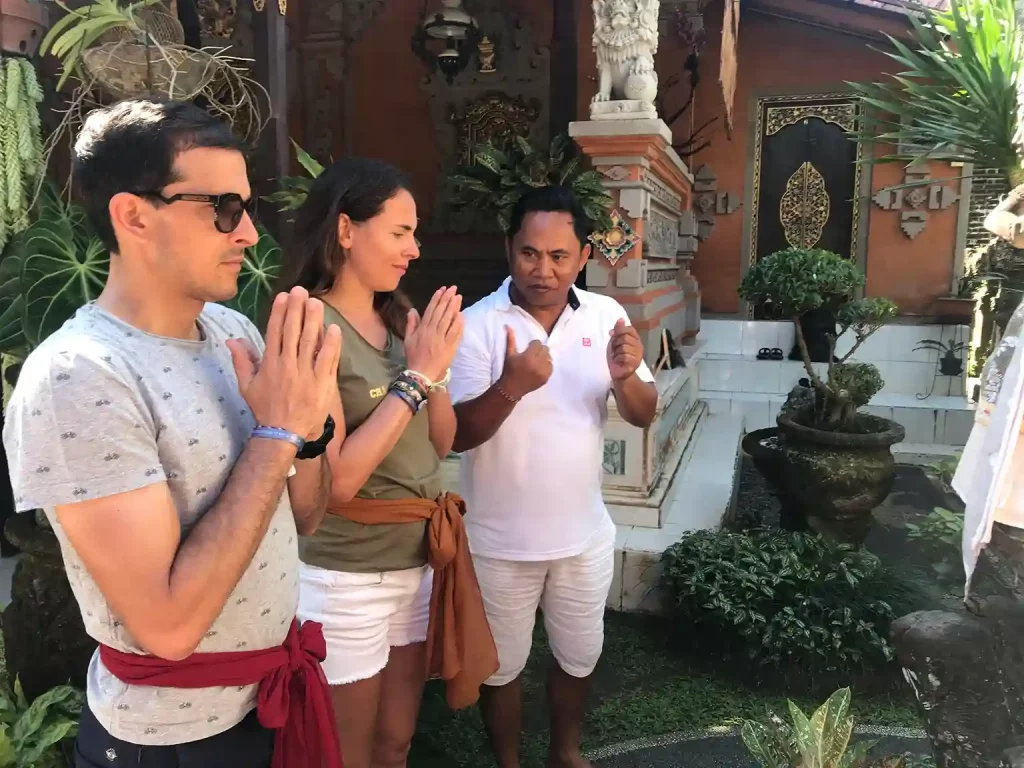
- Inform your Amanaska guide or driver; the host will provide you with a selampahan (sash) and a sarong.
- Enter through the main door, go around the aling-aling, and wait to be guided.
- Never point a foot towards the altar, nor pass in front of someone seated higher.
Respecting these rules transforms the visit into a sincere exchange. In many villages, you will be invited to taste ginger coffee under the Bale Dauh; an ideal immersion for a family trip to Bali.
Contemporary Homes: Reconciling Concrete and Tradition
In the touristy south (Canggu, Seminyak), modern villas integrate infinity pools and Wi-Fi… but often retain a small Sanggah Kemulan in the northeast of the property.
Architects create polished concrete bales, imitating the traditional form, and sometimes move the Western-style kitchen to the kangin (east) side for light. Thus, even a chic complex still displays the sacred geometry – proof that modernity bends to ancestral order rather than the other way around.
Why This Arrangement Fascinates Travelers on Vacation in Bali
Understanding the Balinese home is decoding the island: you find Mount Agung (kaja), the sea (kelod), the masculine/feminine duality, the idea of cycle and reincarnation. For the visitor, the courtyard then becomes an open book. They know that the gamelan repeats on the east side to catch the first light, that the grandmother sleeps on the mountain side, that the grain of rice stored in the southwest awaits rebirth in the visitor’s belly.
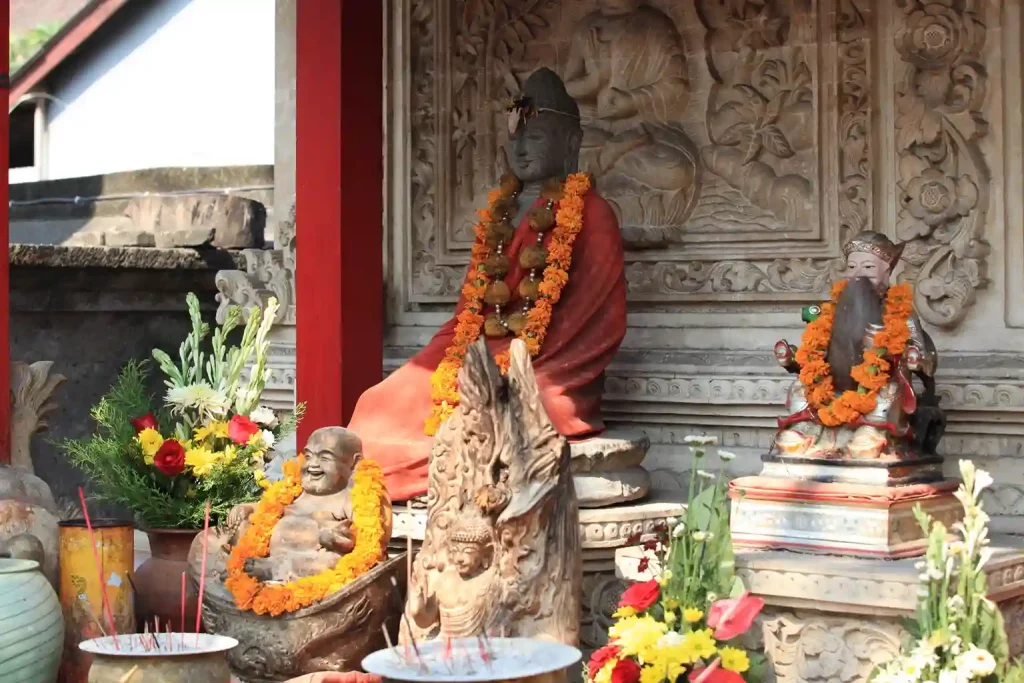
In summary, learning the anatomy of a Balinese home before traveling to Bali transforms every step into a cultural key: the smallest pavilion tells a story of ancestors, cosmology, and sharing.
Add this step to your next Bali tour; your temple photos will be more meaningful, and your respect for daily Balinese life much deeper.
Selamat datang di rumah Bali! May your next door open to an intimate understanding of a space that, for centuries, has embodied the balance of an entire island.